Groundwater depletion, sea level rise, and satellites
“We are losing so much water that the groundwater loss is driving up sea level rise and it is doing more damage than the glaciers are in terms of sea level rise. So that’s a new one.”
A conversation with Jay Famiglietti (Global Futures Professor at Arizona State University and Director of the Arizona Water Innovation Initiative) about groundwater depletion, sea level rise, mega-drying regions, and increasing public awareness of groundwater. Released December 5, 2025.
guests on the show
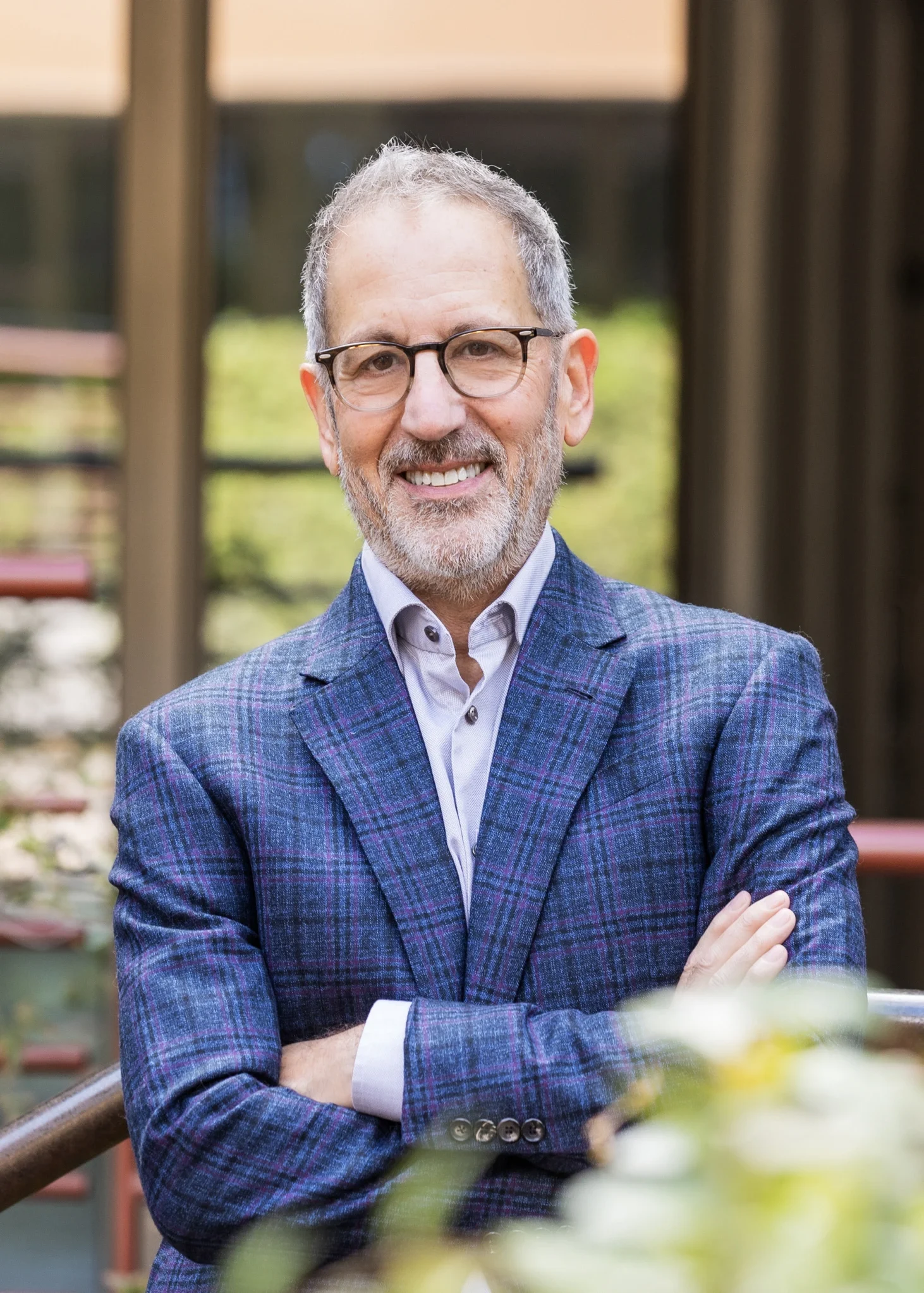
Dr. Jay Famiglietti
Jay Famiglietti is a pioneering satellite hydrologist and a Global Futures Professor in the School of Sustainability at Arizona State University, where he is Chief Scientist of the Arizona Water Innovation Initiative. As Executive Director of the Global Institute for Water Security at the University of Saskatchewan, he led Canada’s top freshwater research program. Before moving to Canada, he served as Senior Water Scientist at the NASA Jet Propulsion Laboratory at the California Institute of Technology; he was a professor in Earth System Science and in Civil and Environmental Engineering at the University of California, Irvine; and he was a professor in Geological Sciences at the University of Texas at Austin. Jay and his team use satellites to track changing freshwater availability and water risk across the globe. They developed the groundbreaking methods to detect groundwater depletion from space using the NASA GRACE mission.
Jay has been researching and communicating about water and climate change — in academics, in business, in government and to the general public — for over 30 years. His research and commentary are often featured in the international news media, including the New York Times, the Los Angeles Times, The Washington Post, The Guardian, The Economist, and the Harvard Business Review, and in network, cable and public television news. Jay is a regular guest on National Public Radio, BBC Radio, CBC Radio and other public radio shows. He is the host of the “What About Water” water and climate science communication podcast.
TRANSCRIPT
Faith Kearns
So today we're talking about groundwater, which is definitely a sea that we all swim in, but I don't know that everybody is super familiar with what groundwater actually is. And I'm gonna attempt to talk about what groundwater is because it's really central to our interview with Jay Famiglietti today. I think at a fundamental level, it is the water that we can't see, that's literally under our feet in the ground.
It's pretty rare to be able to see groundwater. I think, you know, sometimes it bubbles up from springs or sort of artesian wells. And so you can kind of think about that as groundwater, although at that point it's at the surface. That's a little bit confusing. But I think the overall idea, right, is that there's water that is in the ground. It can be fairly close to the surface, but it can also be really, really deep.
And it is in what are called aquifers that people variously describe as sort of like a sponge that has water in between porous elements of different kinds of sediment. And some of it can be really, really old. For example, I know that Phoenix is actually underlain by a huge aquifer of very ancient groundwater that, as you can imagine, in a place like Arizona does not get recharged very easily because it is deep and we don't get that much precipitation here.
And that's a little different than the kinds of shallow groundwater tables where you can get pretty quick recharge. So even in Arizona, for example, in northern Arizona, we we do see a pretty quick precipitation or snow melt to groundwater recharge happening. So it's pretty variable, but I think the overall idea is that we underappreciate groundwater its role because we can't see it and tend to use it as sort of a savings account is how people talk about it a lot, right? Like when we are in drought conditions, for example, people tend to draw on groundwater a lot more.
So I've probably left about a 10 million things out of that definition. So Mallika and Sam please feel free to fill in behind me there.
Samuel Sandoval
I think you did it pretty well. And also that a lot of the groundwater, because it's accessible over an area, it is also a shared resource. Also, typically, most of the cities, because of having that underground storage, typically they tend to have wells that extract that groundwater from the aquifers and use it. And that because of the characteristic that you're saying that is under our feet that we cannot see it, typically is being overlooked or overused. And we can see that through the water table, the level of the water going time-wise going down. I don't know, Mallika, something else to add?
Mallika Nocco
I will just add the area that's most related to what I study, which is that we extract groundwater for irrigation. And that's one of the major extractive uses of groundwater is to irrigate our crops. And we're going to talk a lot about groundwater sustainability, depletion, changes in groundwater because of over-extraction. So we thought it'd be important to think a little bit about what groundwater is and why we use it. Well, what else do we want to say about it? Anything else?
Faith Kearns
I'm going to add that a lot of times people might be more familiar with the ground level itself actually sinking due to overextraction of groundwater. So there's a pretty famous set of photos from California, for example, that shows these spots where the Central Valley has sunk by 10 or 20 feet. We have very similar things for Arizona. I'm sure they exist in other places that I'm not as familiar with. So that is one way that on the surface of the planet you can actually see the impacts of groundwater withdrawal or over-withdrawal. It's just that the ground starts to compact, crack, can create fractures, all sorts of stuff.
Mallika Nocco
Yes, people call that term subsidence. And Faith, you're answering that question of what is subsidence? How can we think of subsidence? It's because the water is actually taking up space, right? It's in these aquifers, it's in the pores, and water's taking up space. So if you take out the water, that space is lost, and there's actually a lowering of the surface because you're missing the water. And maybe we will use that famous photo for our podcast this week because it is such a damning photo.
Faith Kearns
It makes it clear, that's for sure. All right. Well, without further ado, let's get into our conversation with Jay Famiglietti. Welcome to Water Talk. In today's episode, we're talking with Jay Famiglietti about groundwater and maybe a few other things.
Jay Famiglietti is a global futures professor in the Arizona State University School of Sustainability, where he also serves as the director of science for the Arizona Water Innovation Initiative. It is very hard to cover all of Jay's accomplishments, but for some highlights, he has been faculty at the University of Texas at Austin, the University of California Irvine, and the University of Saskatchewan, as well as serving as senior water scientist at the NASA Jet Propulsion Laboratory at the California Institute of Technology.
From 2013 through 2018, he was appointed by Governor Jerry Brown of California to the California State Water Boards in the Santa Ana and Los Angeles regions. Jay is also a well-known science communicator who was the host of the What About Water podcast and whose work has been covered in many, many major media outlets on television and in film. So welcome, Jay.
Mallika Nocco
Jay, welcome. We're really excited to have you here. Can you please tell us about a pivotal moment that led you on your professional path?
Jay Famiglietti
I think a big one for me. So, you know, it's college. I want to be a veterinarian, and I found that I was woefully unprepared for the rigors of pre-veterinary studies. And one semester I was looking for a third or a fourth class, can't remember, maybe a fifth class, and a friend was taking a geology class, and they invited me into this class, and that was the pivotal moment right there, walking into that geology class, either my first or second semester sophomore year, and never looked back. Went 100% earth science and then got deeper and deeper into water, and here we are.
Faith Kearns
That's so funny, Jay. I don't think you and I have ever talked about that, but I had the same. Ancient life was the one class that turned me into an earth scientist.
I'm just gonna dive right into your really current work. So your research group had a paper out earlier this year that focused on groundwater in the Colorado River Basin and had some pretty sobering findings. Can you can you talk to us about that work?
Jay Famiglietti
Yeah, I think the motivation behind that work, and there was the original paper on almost the same topic, I think it was 2015, led by Stephanie Castle, who was a master's student, and this paper at UC Irvine, and this paper is led by Karem Abdelmohsen, who was a postdoc and now a research scientist in my group here at ASU. And the motivation behind that work, right, is to really expose how much groundwater is being lost from the Colorado River Basin, and in particular from the lower Colorado River Basin, and even more in particular, Arizona.
You know, we spend so much time and we should talking about the Colorado River, but a lot of that is, you know, it's politics. It's the politics confronting overuse, overallocation, and climate change. And it sucks up a lot of oxygen and it leaves nothing left for the groundwater. And then we have the situation that we have here, which is we're losing a tremendous amount of groundwater.
Say we focus on Arizona or the lower Colorado River Basin, and it's something like 70% of the water that's being lost from Arizona and from the Lower Colorado River Basin is groundwater. And yet only 18% by of the state by area is managed. The upside of that is that our governor, Katie Hobbs, is very much aware and is really pushing to expand groundwater protection across the state.
Faith Kearns
How do you see the results of this work playing, if at all, into the very current issues on the Colorado where literally the November 11th deadline to come to some kind of agreement passed without an agreement? I still find it's pretty hard for people to wrap their minds around the groundwater and river relationship. So what is the mechanism by which groundwater is disappearing in the basin? Is it primarily due to climate change and heat, evapotranspiration?
Jay Famiglietti
Well, that's a big part of it. And the other part, of course, is the groundwater pumping, and most of that is for agriculture. So we use a lot of groundwater for for agriculture. A lot of it's to grow alfalfa, which is generally exported, and other crops that that use a lot of water. So I think in a situation like this, where the region has been losing water for decades and we know it, the only thing I'm really adding is the reminder that, hey, a lot of this is groundwater and groundwater is unprotected.
We have this large-scale view we get from our satellites. And so, the future, I think, look, I think our future is at risk here because I think one of the key messages, I hope, comes out of that paper, and then the global paper that came out on July 25th, which is the Arizona and the Colorado River Basin paper, but just blown up all over the world, is that groundwater is very likely our most precious, most valuable natural resource in the dry parts of the world. Yet it's the least protected.
So, in terms of what kind of impact we can have, I mean, we're well connected to the governor's office of resiliency through our Arizona Water Innovation Initiative.
Samuel Sandoval
Jay, I mean, as you were saying, this study that you did in the Colorado, now you're doing it throughout the globe. And it's pretty sobering in all the different regions that we are seeing that are in decline related with groundwater resources. And I don't know, for me, groundwater resources, it is our savings account, it is our source during drought periods. We are experiencing more. So, anyway, can you talk with us a little bit further about your global study, some of the findings? Do you have a call for action?
Jay Famiglietti
You know, big picture, the continents are are drying in terms of our satellite data. We look at that as negative trends in total water storage, which is all of the snow, surface water, soil, moisture, groundwater combined. The expansion of the drying regions of the world is growing at about two times the size of the area of California each year. We've created these monstrous, what I think I called the mega drying regions because I didn't have a good term. But, you know, in the past, when we published these global maps, you'd see these hot spots for groundwater depletion and ice melt, and they'd be fairly distinct. But now there's so much drying in between, across the southwest, sort of connecting the Central Valley and connecting the Ogalala aquifer and going down Mexico and Central America, that we now, and actually this is brutal to talk about, going up to the northwestern United States. So we identify these four mega regions. You know, long story short on water availability, that should say what the mega regions are. So Canada, Northwest.
Mallika Nocco
I was gonna ask, yeah, what is a mega drying region?
Jay Famiglietti
Huge region of the continents that has lost water over the last 22 years, as seen from our satellite data, significant amounts of water. And so the big regions are, you know, imagine like all of northern Canada, right? Which is warming at four times the global rate. You know, most of northern Russia. I mentioned then southwestern US. We actually call it southwestern North America, down into Mexico and Central America, and then this monstrous region that goes, it's the MENA, so Middle East, North Africa, all the way across Europe and west to east, all the way across China, you know, to the Far East. So those are the main regions.
And so a take-home message there, we did some work that that paper actually was summarized and then became the first chapter of a World Bank report, which is a very similar name, Continental Drying. And one of the things we did for the paper and the report was show these data by country. And we showed that 70% of the population, could be 75. Again, my numbers, too many numbers between the two papers. So 70 to 75 percent of the world's population lives in the 101 countries that have lost fresh water since 2002, which is when satellite data started.
The other thing, from a global perspective, is that the loss of this water, this water ends up in the ocean. Okay, so we pump fossil groundwater out, where does it go? Well, some of it infiltrates back down, a lot of it evaporates, and a lot of it runs off, and some of it goes into the plants. And just simply because the atmosphere, compared to the land and the ocean, cannot really store any water, right? It's got very minimal storage capacity. And so the only place for for this water to go is to accumulate in the in the ocean. So now the land is the biggest contributor to sea level rise, bigger than either of the ice sheets. Right? So all of the continents except Greenland and Antarctica. And then within the land, the biggest the biggest contributor you to sea level rise.
So we're kind of switching topics and talking about sea level rise a little bit, but the biggest contribution from the continents, again, leaving out Greenland and Antarctica, the rest of the continents, to sea level rise was the glaciers melting. Alaska, you know, Patagonia, Himalayas. And now that's not the case anymore. Now it's these drying regions, and it's the groundwater losses from these drying regions, which is about again, about 70% of the total losses that we see in these drying regions are coming from groundwater.
So it's a global phenomenon. We know that we've published it in different ways before, but in this paper, we have the opportunity to engage with another community, and that's the sea level rise community. Just another way to try to get the message across. We're losing so much water that this groundwater is driving up sea level rise, and it's doing more damage than the glaciers are in terms of driving up sea level rise. So that was a new one.
Samuel Sandoval
And Jay, one other thing that you mentioned there is that, well, there are some, I'm not sure if it is issues, but political maneuvering on climate change. For managing groundwater, you are calling it like we have something specific. Can you elaborate on that?
Jay Famiglietti
Yeah, thank you. So, yeah, at the end of that paper, I think I sort of get a little bit philosophical and if not a little, I don't know, not depressed, but not overly optimistic. And I say something like, well, we're not making a heck of a lot of progress on climate change, right? And of course, anything we do to impact climate change is going to impact the water cycle and can help reverse some of these trends.
But the one thing that we can do is make decisions about how we use our groundwater. That's the one thing, you know, that we're making an active choice. I mean, yes, we're making an active choice about fossil fuels, but even if we changed everything now, we'd still be in rough shape for a long time. But there's an active choice we can make right now to limit the drying, to preserve groundwater, and to decrease rates of sea level rise. And that is to manage our groundwater better. So that was the the call to action.
And so part of what I do is then go to these global meetings and try to bring that message. And that's hard because that's a different world. That world, you know, the UN Water, which is sort of like an umbrella for many organizations, including the WMO and the FAO, and all the international organizations like UNESCO are super important. But in the very few meetings that I've been to, I've probably been to maybe half a dozen now, between COP, between the Bonn meeting is halfway through the year, it's sort of preparation for the COPs and World Water Week, and now we're going to World Water Congress in Marrakesh.
I see that world is organized, but it sort of talks to itself. And so, how do you take that UN water message and get it into, you know, raise awareness of water and groundwater, bring it to the level of CO2? I mean, it's really, really hard.
Mallika Nocco
So you've kind of touched on this, Jay, but you really do a lot of interacting with decision makers and these people who need to act based on your findings. What kind of strategies do you find to be effective when you are interacting with decision makers?
Like you mentioned, for example, with the governor's administration in Arizona, that they have the information and they can do what they want with it. But that's kind of, I guess for our audience, that's indicative of someone who's established a relationship to get that information to those people who need them.
Can you talk a little bit about the road on that front and what it looked like to get to a place where you can get people to listen to you? So many of us want someone to listen to us.
Jay Famiglietti
Excellent question. I guess when I reflect on it, it's you have to do the research. And it has to be, in my case, I think I was bringing something new to the table. And once I appreciated, I mean, there were other career-changing research moments. And one, so we talked about, you know, what happened as an undergraduate, but the decision to pivot to working on the with the NASA Grace mission, the gravity recovery and climate experiments, that was a kind of pivotal thing that happened to me at University of Texas.
And then once the data started coming in, when I was at University of California, Irvine, looking at these global maps develop and the hotspots for groundwater, realizing the first one that what it was that really popped out was in India, it was northwestern India, and that was the first big paper. And then realizing, looking at the map, you know, I used to say it's kind of like watching a picture develop, which is kind of a lost reference now, right? But like, you know, back in the day, you'd watch your picture might have been a Polaroid, it might have been putting into chemicals, and then this picture just starts to come into focus.
That there are all these hot spots and the realization that, like, oh, I think that's, you know, the Central Valley. Oh, I think that's the Ogallala aquifer, I think that's the northwestern, the Northwest China plain, realizing that, oh my gosh, we have a major problem here, and people need to know about it.
So for me, I started in California and I started with writing. And it did build slowly. I mean, I started in a lot of lecturing too. So the work kind of took off, and then I was doing this lecture tour, the Burns Aldreis Lecture Tour for the Geological Society of America, that led me to start writing blog posts just on my own blog. I just, you know, made a site on WordPress and started posting some stuff. And then, you know, it got noticed, it got picked up.
I started writing for National Geographic, and then at some point, the work kept going, you know, we were getting more interviews. I sort of developed my voice and then started writing. I asked the LA Times, unsolicited first time, about an opinion piece, and I was so surprised that they said, yeah, this is good. We'll take this. And then so then it just built from there. Then they started asking me once a year for an opinion piece, and then that led to more television stuff.
And in the meantime, the work is just rolling out around the world, you know, global papers, regional papers. But the thing that underlies all of it was this sense of, oh my gosh, I really need to tell people about this. People, whether it's in California or it's Arizona or it's Ogallala, tried national stuff, had some success before our administration turnover through the President's Council of Advisory on Science and Technology, the big groundwater study that they did.
But yeah, it's this sort of driving I need to need to do this. I need to people need to know what I'm seeing and use it in any way that they need to to impact water sustainability.
Samuel Sandoval
So Jay, perhaps it as much as you presenting to decision makers or people that will make a decision, as much as also presenting this to the public and making this information public, so pressure not only comes from you but also from the community that is around it that can be affected.
Jay Famiglietti
Well, if I had to guess, I would say it's 50-50, and that's sort of the feedback that I have gotten through the years. And you know, I should be clear that not everyone loves it. So meaning like, okay, the Department of Water Resources in California. You know, they're not necessarily crazy about the the message, they're trying to work really hard and you know, keep the state on track, which, I thought our state water management in that time period that I was there, I thought they're quite good at, especially with Felicia Marcus and the State Water Resources Control Board and Jerry Brown. That's the time I was active in. I thought they did an excellent job.
But you know, agencies, they're very territorial. You know, USGS would get upset. Why is NASA talking about groundwater? They're a space agency, we're the groundwater agency, Department of Water Resources has one message, we have another one. And so it's not always a match made in heaven, but it's still important because we're unbiased, we're just reporting and communicating.
Faith Kearns
Yeah, thank you for that, Jay. Obviously, we're kind of circling around a few topics around decision making and science communication. And, you've been a scientist and a really strong science communicator for a long time. And at least from where I sit, you've been successful at it. I mean, I know it's more complicated a lot of the time in terms of what that really means. But one thing I really want to ask you about, because I think it's coming up a lot these days in the sort of very changed communications landscape that we have, especially in 2025.
You really tend to not shy away from communicating about controversial issues. Even communicating about them, I would argue, somewhat controversially. And speaking in a way that I think really resonates with the media, but also might go against what we consider sort of the traditional norms of scientists communicating, what our institutions consider norms around, you know, scientists communicating.
I remember early on when you were in California and I had just returned to California and some of the LA Times pieces you had that were like, you know, California is going to run out of water in a year, right? And I can see where that lands like a bomb for people. It did a little bit for me, right? Because I'm dealing with the downstream ramifications then of people like going, are we really running out of water?
But I've gained a real appreciation for the folks who are positioned to make those kinds of statements. And not all of us are, right? And so anyway, I'm just trying to get at again, like, do you have advice or just thoughts on like how people can navigate today's science communication landscape? Because I feel like the institutional constraints still want you to kind of communicate in a whatever a scientific professional way is. But what gets public attention is much more what you do, which is like, I am personally scared. This information actually bothers me personally, you know. So just kind of thoughts on your your communication style, how it works.
Jay Famiglietti
Yeah. Well, so I think when you get, California's running out of water op-ed is an excellent case study. We'll get back to that in just a second. But because of what can happen, I always encourage, especially, in our world, which is you know, tenure track, research professors, be careful in your early career. And sometimes if you say something controversial or if what you said has been taken out of context, which happens a lot, I'll give you two or three examples, it can be very dangerous.
And so I think when you are younger, always say to people, don't communicate just to communicate, right? For people like me, like if you are a researcher, make sure you have something important, make sure you've got that, oh my gosh moment that you feel like I really need to tell somebody about this. And then, like we saw the water scarcity, like a couple of months before the Arab spring, I tried to tell the Senate Committee on Foreign Relations, or maybe it's the House Committee, uh, Ed Royce was the chair, and he was in California. And so I tried to show him this stuff. And he literally thought that I just wanted to take a picture with him. That's what he thought. Thought, like, oh, photo op. Okay, so be very, very careful, be judicious, start easy, you know, start writing blog posts and things that are not controversial.
Be careful when you're younger. You know, I think you need to get to a point. If you're gonna get to the point of things that are really controversial, I think it's important that you have job security, right? That you know, you're not really risking anything. Because here's what can happen.
So, Faith, excellent example. Did I say that California was running out of water in one year? No, that's not what I said. Was that the headline? Yes. Then the media picked it up, and then the media said, NASA says, or NASA scientists says. And that got me in so much trouble, it practically got me fired. If you actually read the opinion piece, it's just like the, you know, I said I started writing one every year. It was just like the previous ones. Every year I'd write an opinion piece that said, Hey, California only has three years of water in its reservoirs, so let's be careful. Then the next year, oh, California only only says, you know, two years of water in its reservoir, so let's be careful on the groundwater. Then that one. California only has about one year of water left in its reservoirs, right? For surface water supply. So we need to be really careful about the groundwater.
And that's when, okay, advice when you get to the point where you can have headline control with a newspaper, you need to do that. And so I've always had it ever since then. Um so anyway, that got me in a lot of trouble. And you know, they wanted when I was at NASA Jet Propulsion Laboratory, they wanted to fire me, send me back to UC Irvine until they were literally, I had to use the H-word to get them to stop. The H-word being harassment. Like, okay, you don't need to call me into the principal's office every every afternoon for the week following this opinion piece, when I've already told you, if you read the op-ed, there's nothing controversial. I've already told you I didn't have headline control.
So that's the kind of jam you can get yourself into. Another, you know, interesting example is the essay that it wrote for the New York Times when the title was Do We Need to Pump the Great Lakes?
Mallika Nocco
I know that title. It's like the one where you came for the midwest.
Jay Famiglietti
And of course, yeah. That is not what that op-ed was about. But that is, and it was and that was agreed upon. I mean, you have to do a little dance. So this is what you're saying, Faith, about like communication. To me, it's like a little bit of a dance with the devil. And you know, you're gonna get a lot of reach.
And if people actually take the time to read it, they'll realize you know, it's fairly thoughtful, I think. Uh huh. But it's not about let's build a pipeline. It's more like, oh my gosh, if we don't get our acts together, some crazy politician or you know, groups are gonna start building monster pipelines. So let's do what we need to do. That's what that op-ed was about.
So again, that was knowingly, you know, for better or worse. I wanted to get that, have the reach of the New York Times, and know that it was going to be controversial. But, you know, you know that people are it's kind of mischievous. Very much, but that's where we are.
Faith Kearns
I think that that's one of the big arguments happening right now is just around sort of university academic communication, is that the constraints on us from our institutions are a mismatch with what's actually going on in the larger communications landscape, right? And I think your experience bears that out, where in some ways you do need to generate a little bit of controversy, but the blowback, it's a really tough line to walk.
And I do appreciate you being candid about your the actual situations you faced, because I think sometimes it can come across that doesn't happen to everyone, especially somebody in your position. So it's yeah, I wouldn't say heartening, but it just feels a little bit more like solidarity with everyone who's trying to communicate something that's really hard but really important. And so I do appreciate the work that you're doing.
Jay Famiglietti
Well, yeah, thank you. And you know, it's again, it's intentional. And, you know, I couldn't even bear to read. I don't think I read even one comment on the New York Times stuff. And by the way, the comments shut like within an hour. So, like, of course, they were thrilled. And here's me, like afraid to actually look at the comments uh because I know what they're gonna say.
You know, I may have told you this before, Faith, but I'll repeat the story here. Similar headline taken out of context, NPR radio interview up in Minnesota, asked me what keeps me up at night. And I said, Oh, I have these dystopian nightmares about pipelines from the Great Lakes to, you know, California and desalination plants up and down the coast, uh coasts of the the world. And so it was the print version was NASA scientists sees pipelines from Great Lakes to California, and so that's where the whole pipeline thing started, and I got hate mail from a middle schooler and sent it, found my address.
Found my address at JPL. Here's this like handwritten note from a you know, you can see it's sort of like childish handwriting, like, oh my gosh. That I mean, I'm still talking about it. It really, really hurt to be, you know, misunderstood in that way. But you know, it it hasn't stopped me. It just part of the landscape.
Faith Kearns
Yeah, I mean, I think it just shows that you can write something that's pretty milque toast and it'll just pass people by, right? And so then the other side is you say the thing that needs to be said, and there can be some blowback.
Mallika Nocco
Or nuance can be lost so easily, right? If you can say, I fear this thing, and if a scientist says I fear this, it becomes a prediction.
Jay Famiglietti
I know, exactly. Right. And you know, in both cases, it was sort of like so the I think it was Minnesota Public Radio and the New York Times. You know, the message that got out was the actual opposite of what the topic was. So the impression is, oh, this guy's like pro pipeline.
And Faith, you know, you'll probably appreciate this. After the Minnesota stuff, you know, on Twitter. I used to be active on Twitter. I'm not anymore. I mean, so many people, you know how our society is, they love it when like, you know, there was like icon smashing going on. It's like, oh my gosh, he's gone over to the dark side. I can't believe he did this.
Faith Kearns
Like, they smelled blood in the water.
Samuel Sandoval
Hey Jay, now, so what are the biggest challenges that you see in terms of groundwater? So, what are things that you say, like, wow, we have to surpass this challenge? And also on the other side, like what gives you hope?
Jay Famiglietti
So, to me, I think let's focus on the United States. We need to make sure that every state has a workable, potentially effective groundwater sustainability plan. And I think that we need some kind of national coordination. And that's what we talked about with the president's council of advisors on science and technology. I think that we really, we really need that. We don't need, you know, just like sort of like take the California Sustainable Groundwater Management Act and think about that over the entire country.
Not that you want some agency to come in and say, hey, you need to do this in Nebraska, but if they're not doing what they need to do in a particular state, then you know, get some whatever encouragement from or help or something, backup from the federal government. I think that's really, really important. To me, that's you know, and part of that is the monitoring, better monitoring and of the water uh and understanding of our groundwater resources.
You know, the hope is always to me comes down to the students. You know, we're in the School of Sustainability, uh, in the College of Global Futures, in the Global Futures Laboratory. And there are a lot of young people out there that are really, really committed. And so, you know, you take my group and think about the students that I have produced through the years, and multiply that by all these different faculty, and we're, you know, really building a lot of community and a lot of dedication. So that gives me hope.
Also, you know, the message I think is it's slow, but I mean it's absolutely getting out there. And like you look at what's happening in Arizona, like the message is is out there, like this needs to be done. We know it. There are obstacles, but the message is out there. So, you know, I'm yeah, cautiously optimistic. I'm right there between the half empty and the half full. I think it just depends on the day.
Mallika Nocco
It just occurred to me as we were talking, there's been some fear about NASA canceling its earth observation program. And I have an extension position and I work with farmers. And I think that there's so many communities that don't really understand why earth observation is important, what it is, like that that that's a significant chunk of what NASA does. And it has been so pivotal to the work that you've done that I'm wondering if you could speak a little bit about its importance.
Jay Famiglietti
So let's start with where I think it's it's headed in the current administration. I think it's safe. And I think that it's safe and it's been safe, and there are a number of different satellites: the soil moisture satellite, the surface water satellite, there's the new radar that can with India that can be helpful for groundwater. There's the grace missions, precipitation missions, and so on. So uh all that's going along fine. And I think it's because it's not, you know, it doesn't fall under climate change, it's under water management, and I think it really helps us understand, helps us improve our predictive models, helps us really understand the changing extremes. And uh so that that's really really important.
Um you know, the role of the satellites, I think, I know you understand it, but to your listeners, we don't really have great observations of hydrology on the ground. People think that we do, but we really don't. You know, we've got a decent stream flow network in the United States. We've got pretty reasonable groundwater, and you know, okay precipitation, but none of it is really enough to do a crackerjack job in, say, a medium-sized watershed. And that's the way it is, you know, around the world. I think the United States is better off than a lot of countries.
So the role of the satellites is that you get this synoptic, a large-scale view. It could be global, it could be all of the United States, it could be all of the western United States, of all these different important variables for hydrology. It's precipitation, soil moisture that's so important for farming, the grace data that's so important for understanding groundwater storage changes and total water storage changes. There's the surface water and ocean topography mission that's now allowing us to measure stream flow uh discharge from space. And so this unprecedented global picture is coming together that is really transforming our understanding of how, you know, of water availability, let's just leave it at water availability.
I won't get into the technicalities of spatial and temporal variability and all that. Just water availability and the risk of flooding and drought. And then, of course, the groundwater, the disappearance of groundwater is unprecedented. And if we lose that, and we haven't lost it yet, but if we lose that, some other countries will pick up the slack, but we've been such technology leaders in the satellite hydrology space that it could be, you know, decades before we recover. And it would have huge implications for food security, water security, energy security, all the all the S words.
Samuel Sandoval
Thank you, Jay. And also thank you for being candid to talk with all of us and our audience about all these topics and strategies and also to sharing your your long-term visions. So we always like to ask our guests if there is something else that you want to add for our listeners and how can we support your work.
Jay Famiglietti
So I think the biggest thing is to, for all of us, to really pay attention to our elected officials when it comes to water, right? And we know that a lot of our officials don't know a lot about water. And so I think it's really important. That's I think underrated impact that we can have.
And the other thing I think is to keep in mind what I said about groundwater and it being, you know, we used to out here in the West, we used to say that the Colorado River is the lifeblood of the West. It's really not. It's really groundwater. And so, you know, getting people to understand, and that includes our decision makers and resource managers, really making sure they understand how precious the groundwater is, how important it is to our economy, to our food production, to our environment, and its need for protection, not just in Arizona, but really across a lot of the Southwest, is really, really important.
Faith Kearns
Well, thank you so much, Jay. This has been a really super interesting conversation, and we really appreciate your time and and your work. Thank you so much.
Jay Famiglietti
Thank you. Really appreciate it.
Faith Kearns
All right, so now it's time for the parting gifts section of our podcast. And I'm wondering, Mallika, Sam, what are your parting gifts from our conversation with Jay?
Mallika Nocco
Yeah, that was a really fascinating conversation and what a character. I think my favorite part of our conversation with Jay that I didn't realize because I, you know, like many of us who study water, I've read a lot of his editorials and some of the work that he's written, but it was funny to hear how mischievous he was about some of those um topics and kind of like to hear almost the strategy behind what he's trying to do in terms of calling attention to these very, very important topics. So that was fascinating.
I will say that Jay's some of his really um seminal papers came out when I was an early graduate student. So it was fun to hear him talk about that work. I remember I really felt a lot of wonder about what you can use satellites to do, like what types of problems and large-scale sustainability challenges and issues that we can study with satellites. And that's really what he's done. And I, yeah, I feel a lot of wonder at it, it just kind of was a game changer, I would say.
Like thinking about, you know, he mentioned that there are these mega drying regions. And to do the work to quantify a mega drying region requires large spatial scale data sets that you can only really get from Earth observations. So that was a really big takeaway for me is just how important our earth observation program is with NASA.
Samuel Sandoval
In my case, I had different parting gifts. So one is how much time he spends communicating with decision makers as much as he does with the general public. And making sure that when he attacks those two points, when he works with those two, they he might be able to get some activities, action passed. In some of the challenges, as he mentioned, he's thinking about sustainable groundwater management throughout the United States. That was very interesting to listen to that.
And the last one, which is a recurring theme in our different uh guests, make sure about who are you electing, the local elected officials, and I think somewhere there, make sure that you vote. That this has been also a recurring uh thing on our guests. So those three parting gifts. Uh what about you, Faith?
Faith Kearns
Yeah, so I was really glad, Mallika, that you added that question about the satellites. I mean, throughout I was kind of like, you know, we didn't really get into his methods and approach. And so I think that's a super helpful thing to add in. And for me, of course, because where my mind tends to fixate, I was really, really appreciative. And I said it during the interview that Jay, you know, really candidly shared some of the effects of some of his communication work because that's one of the challenges I continue to see around science communication, public engagement for scientists is just that I'm not always sure that our institutions are prepared to fully back people up when they do the thing that's attention getting, right?
I think this continues to be like even more of an issue now because in order to get attention in a very, very complex and crowded communications landscape, you know, sometimes you have to say something that is controversial. That is, you know, and so how we start to balance so that we can be on an even playing field with the folks who are completely bombastic in their communications and podcasts and all these things. It's like if we're really clamoring to be on an even communications landscape, I think we need to rethink how people are allowed to communicate and how we deal with the risks that they face personally and institutionally. So yeah, I really appreciated hearing that, especially right now.
Samuel Sandoval
One thing also that it is a good parting gift, he says that at some point when he's doing the science, some of the results, he feels the urgency to share those findings with the rest of the community. That I found something, and it's really um unnerving, disturbing. And I need to share this.
I also think that is also a good parting gift that sometimes we have that urge, and how he started coming out more of that kind of scientific paper, let me just communicate within our own community and going out because of the relevance. So I think that is also a very good parting gift. Until next time.