Making good on the Human Right to Water
“At the end of the day, I want the Community Water Center to not exist and to have a country where we implement the Human Right to Water for all human beings”
A conversation with Susana De Anda (Executive Director and Co-Founder of the Community Water Center) about the gaps between legislating and enacting the Human Right to Water including accountability, affordability, and leveraging related water policies. Released December 12, 2025.
guests on the show
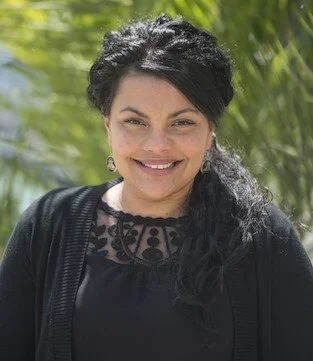
Susana De Anda
Susana De Anda is Co-Founder and Executive Director of the Community Water Center. Susana is a seasoned community organizer and has received numerous awards and recognitions, including: James Irvine Foundation Leadership Award (2018); White House Champion of Change for Climate Equity (2016); Mark Dubois Award from Friends of the River (2014); “150 Fearless Women in the World” by Newsweek Magazine (2012); “Women on Top – Top Activist” by Marie Claire magazine (2012); AOL sponsored PBS three-part series titled, Makers: Women Who Have Shaped America (2012); and “Las Fabulosas” and “Inspiring Latinas” by Powerful Latinas (2011); and the 2009 Petra Foundation Fellowship award. In addition, Jill Iscol’s book, Hearts on Fire, features a chapter on Susana De Anda and CWC (2011).
Susana’s experience includes planning and organizing positions at the Center on Race, Poverty and the Environment; the County of Merced Planning Department; the Santa Barbara County Water Agency; and the Santa Barbara non-profit Community Environmental Council. Susana earned a B.A. from the University of California, Santa Barbara while completing a double major in Environmental Studies and Geography. Susana served for the past few years on the Community Funding Board of the Grassroots Fund through the Rose Foundation for Communities and the Environment, Tulare County Water Commission, and on the Board of Directors of the Tulare County United Way. She currently serves on the Advisory Council for the Water Solutions Network and is a Steering Committee member on the Water Equity and Climate Resilience Caucus. Susana is also a co-founder and member of the board of Water Education for Latino Leaders (WELL).
TRANSCRIPT
Samuel Sandoval
Bienvenidos a Water Talk. Today we will be talking with Susana de Anda, and she has been on our list for many, many years. We are really happy to have her today. It was an amazing conversation. I wanted to bring not only the Human Right to Water, but this vision of having actions, activities, advocacy centered on the communities. And not only that, but also how to provide tools, knowledge, training to community members so they can advocate for themselves. And the ones that are already in power. So basically that was the idea for bringing Susana de Anda. Now, in terms of eating our vegetables, right? Our primer, so we have some primers for it. So we have one, the Human Right to Water. Do you want to elaborate on that one? W
Mallika Nocco
So the Human Right to Water is a concept that comes from the United Nations from back in the early 2000s. And what it means is that every human has a right to sufficient, safe, acceptable, physically accessible, and affordable water for personal and domestic use. And every single one of those words is really, really important. And every single one of those words can be dissected. And if one of those words is missing, it's a problem.
And I think that that's something that we hear about today is like sometimes, you know, you have a few of those words. There is sufficient and safe, but it's not affordable or accessible. That's still a problem, right? So it's all of those words together are very, very important. And that is the meaning of the Human Right to Water.
California was this first state, as we will hear more about, to actually enact this Human Right to Water. And now it's two states that have it on the books. It's California and Virginia have an official Human Right to Water as a state law. But there is no federal law in the United States. So there is not a federal Human Right to Water across the country. And then there are also, it should be mentioned, versions of portions of it again within different state constitutions and other state laws. So I think that is the kind of the eating vegetable part that Sam mentioned.
I was also just thinking about this term a little bit. And shout out to my co-teaching professor for my new class, which is called Water and People that I'm going to teach at UW Madison for first-year students. And we were just talking about, like, what are some organizing concepts on water? What can we think about as a group of really different types of people with different perspectives? Cause that's who the course is kind of targeting. And this is when the Human Right to Water came up. Can we all agree on this ethically? And I think you're hard-pressed ethically to not agree with this, right? Like I think it's a good unifying concept to bring a lot of people to the table.
Faith Kearns
Yeah, I mean, I agree. I think the challenge, right, is one that Susana talks about a little bit, which is that even though in California, for example, this is state law, there's never been money behind it. And implementation is really, really challenging. And so even having it on the books isn't good enough, right? There also needs to be a funding mechanism and all of that kind of stuff. And so it's really interesting too how she talks about how California's Groundwater Management Act has actually played a role in advancing the Human Right to Water.
And I did also just want to note that we had an episode with Greg Pierce where we talked quite a bit about the Human Right to Water as well. So we'll link to that in terms of just trying to give further background on what the Human Right to Water is and the status of it, particularly in California and what that might mean for other places.
Samuel Sandoval
And just for reminding people, this is AB 685, and it states the established policy of the state that every human being has the right to safe, clean, affordable and accessible water, adequate for human consumption, cooking, and sanitary purposes. And that the bill will require all relevant agencies to consider this policy when revising, adopting, establishing policies and regulations and criteria. And this is really important because it's bringing this policy towards enforcing every other uh state agency to actually consider it, enforce it.
Mallika Nocco
But again, no money in that statement.
Samuel Sandoval
Yeah, and she will talk about this as the gold star. And also that it's not only about the money, it's also about reducing the pollution. And you're gonna be keeping an eye on that one, that she's always bringing that like we may have some money, but we need to protect our bodies.
So, anyway, without further ado, let's talk with Susana de Anda. Bienvenidos a Water Talk. In today's episodes, we're talking about the Human Right to Water, community engagement, and empowerment of communities with Susana de Anda. She is the co-founder and executive director of El Centro Communitario Paralagua, also referred to as the Community Water Center. Susana has received numerous awards: the James Irvine Foundation Leadership Award in 2018, the White House Champion of Change for Climate Equity in 2016, among others. Her work focuses on community engagement, organization and advocacy around water access, clean drinking water and affordability, and many other things. Susana de Anda double major in environmental studies and geography from UC Santa Barbara, and she serves in several board of directors positions, such as the Tulare County United Way and the Advisory Council for the Water Solution Networks. Welcome Susana De Anda!
Samuel Sandoval
I think before starting diving into the details of the topics, I really want to ask if you can share with us, with our audience, a pivotal moment in your life that led you on your professional path, where you are and what was that pivotal moment?
Susana De Anda
Yes, you know, I would say that the pivotal moment in my career that led me to continue to advance water justice was when I was door knocking in rural communities here in California, and I was recognizing a similar pattern with every single door knock that I experienced, which was people feared their tap water, people did not know what was in their drinking water, and people were tired of having to pay high water bill prices. And that was a common theme. And that was really the beginning of my discovery on why this reality exists. And I think another thing that was really, you know, pivotal was it was clear who had that same story, low-income people of color.
Samuel Sandoval
Yeah. Thank you. Thank you for sharing that. Yeah, and we will explore further about this.
Faith Kearns
Yeah, thank you, Susana. Um, so again, before we talk about what you're working on, I guess we want to make sure to give some background on the Community Water Center, particularly for listeners not in California, just because I know most water folks in California definitely know what the Community Water Center is. And then maybe some of the work you've done around the Human Right to Water and how that's played into the work of the Community Water Center.
Susana De Anda
Happy to share. Community Water Center's mission is to create a movement driven by community-driven solutions. And that means that we organize alongside impacted residents to discover the problem and more importantly, to be curious about the solutions. The Community Water Center exists because there has been a dirty secret in California, which is clean water flows towards money and power.
And so the organization, we're gonna be 20 years old next year, and we're devoted to ensuring that all Californians, regardless of where you live, particularly where you live, and if you don't have safe drinking water, we believe that access to safe, clean, and affordable drinking water is a basic right and it should not be a privilege. This work that we do is work that shows that the government has failed our communities. It shows that government has failed to adequately plan for infrastructure for water treatment and to contain and have a good understanding of water affordability. Community Water Center works alongside impacted residents.
Many residents in California have to wake up and fear tap water, and therefore they have to make tough decisions. Pay an expensive water bill if they know what's in their drinking water, and if they know not to use tap water, because more often than not, certain contaminants in our drinking water, if you boil it, increases the concentration. Things like nitrates. Things like nitrates have been linked to detrimental health problems. And so what we have here is the reality of lack of investment. So there we have a lot of residents and communities who are having to live with unpotable drinking water, paying twice for water for a water bill they can't use to cook or drink, and on top of that, have to get alternative water supply to have safe drinking water.
And so we're creating this conciencia of fear not to drink tap water, and rightfully so, because it can get you sick. And the contaminants that we're seeing in our drinking water are human-made, which means that we can change this reality, which means that we need to prevent further contamination of our groundwater sources, which means we have to proactively plan intentionally so that our communities can thrive and have the right resources to have safe and affordable drinking water. So that was the impetus of the Human Right to Water in California. The original law that we organized around was AB 1242 led by Ruskin. And that piece of legislation was driven by impacted residents that said, no, in California, no matter who you are, we need to have safe drinking water to have a safe life.
And while we galvanized around this bill, it got to the governor's office and it was vetoed. And the message there was we can't sign this piece of legislation into law because it's going to open up the state into liability. And while I recognize that we can have that, it shouldn't be the excuse not to advance this piece of law. And so therefore we had to continue forward. And after 1242 was vetoed, AB 685 was the continuation of the effort to ensure that we will get it to the finish line and sign into law.
And so the Human Right to Water, AB 685, was signed in 2012 by Governor Brown. And it declares in California that human beings have the right to have safe, clean, and affordable drinking water. It's the first recognized legislation in the country. And I want to say that California recognizes this. And therefore, now we have to work to ensure that we implement such a right.
Samuel Sandoval
How did the idea to put two pieces together; the idea of bringing the Centro Communitario por el Agua? How to put it together? So back in the day when you were thinking about the Community Water Center, the Centro Community.
Susana De Anda
It was the same. Susana, no podemos tomorrow el agua, we can't drink the water. What's in our drinking water? We need to know. So and so is getting sick. Do you think it's because of the drinking water? A lot of questions were being asked, and it was community by community when I was organizing that it was the same story. And so therefore, it was obvious that we needed to found an organization solely devoted to drinking water and wastewater in California to ensure that we would advance and create change.
You know, prior to the Human Right to Water, we didn't have sustainable targeted funding just for our low-income people of color communities. And so the story is very basic. The lack of investment from government caused this NGO to exist. You know, at the end of the day, I want to not exist. I want the Community Water Center to fulfill the mission and have a country where we recognize the Human Right to Water and ensure that we implement that for all human beings. Until we have that, the Community Water Center will exist.
And so we created this organization because there was not a targeted organization or government agency solely devoted to ensuring that we would bring relief. And I can tell you that the story shows that low-income people of color have higher chances of having polluted drinking water. And who cares about that? Why do we allow that to exist? Well, I can tell you that it's entrenched racism. People don't look like us. People don't look like me in the Central Valley, and therefore there's a lot of fear and resistance towards change.
So I am here with the Community Water Center to say we will pass good pieces of legislation. We will make sure that pieces of legislation have adequate resources to solve the reality that we're faced with for far too long. You know, I want to be able to wake up and drink tap water without the fear of becoming sick, just like any other neighbor and any other community resident that I get to work with.
This is a personal invitation for all of us that are listening to this. Figure out what's in your drinking water. Recognize that because it's clean and it doesn't have a smell, it doesn't mean it's guaranteed to be safe to drink. And that's really important that we become informed as individuals to create the change that we want to see. And those of us that have safe drinking water, I invite all of us to work with community organizations like us or others to advance such rights for everybody in this country.
Mallika Nocco
So it sounds like the bill that passed the Human Right to Water, is a human right to drinking water specifically. I know that's like, for example, the UN has this definition that also includes sanitation. So in its current state, right now, the Human Right to Water in California includes drinking water, but it doesn't, it wouldn't include sanitation. Is that right?
Susana De Anda
That is incorrect. Actually, the Human Right to Water recognizes that every human being has the right to safe, clean, and affordable access to adequate water for consumption, for cooking, and for sanitary reasons.
Mallika Nocco
Okay, okay. And that is what the right is that should be enforced in California. I mean, it should be enforced everywhere, but the actual bill that's passed. So after the Human Right to Water passed in 2012 in California, there have also been several other regulations in this state that passed. For example, there was the Sustainable Groundwater Management Act that passed to try to, you know, gain some sense of groundwater sustainability, just to mention another key act. So things kind of keep changing.
And in your perspective, what do you think is the current state of the Human Right to Water in California? And what is your vision for the future? And I think you already said a little bit of your vision, because your vision is that there doesn't need to be as much of an organizing around the effort because it just exists. But any other things you might want to add to your vision?
Susana De Anda
You know, I would say that AB685, the Human Right to Water that was passed and signed into law in 2012, declares that all human beings have the right to save, clean, and affordable drinking water. And it's important to recognize safe, clean, and affordable drinking water. I would tell you that right now, we're failing to deliver on the dream.
Now, the Human Right to Water was a law that was passed with no resources to actually implement the law adequately and intentionally. So therefore, as organizers, we recognize that we use the Human Right to Water as the North Star. But the implementation strategies have been through Sigma, the Sustainable Groundwater Management Act that was passed in 2014. Why is that important? Well, it's important because we have two sources of water. We have groundwater and we have surface water. To tap into surface water, you have to have water rights for that. Some cities have that. The communities I work with don't have water rights to surface water because it's very expensive. So therefore, we rely solely on groundwater.
Well, SGMA was passed because we recognize that in the state of California, over 90% of Valley residents relied on groundwater for drinking water. However, there was no law to monitor the consumption of groundwater. So therefore, SGMA was the tool to control the consumption of groundwater not just for agricultural purposes, but also for drinking water, which means that we have to make sure that we can't continue to pollute groundwater because we rely on that for drinking water. So SGMA is instrumental in controlling the beneficial uses of groundwater to also consider that for drinking water. That's huge.
Secondly, while we passed the Human Right to Water, we recognized that in order to solve the solutions on the ground, we needed to have sustainable, targeted funding to bring about change. So we can pass the law and feel good about the law, but I feel better when we implement the law accordingly with resources. And so therefore we pass SAFER in 2019. Why is Safer important and historic? Well, SAFER finally recognized the need to have sustainable funding for interim and long-term solutions only for our low-income people of color communities that have failing water systems. That's huge. And so these two acts are showing you this is how we implement the Human Right to Water.
Now, to your question, what are we failing on? Affordability. Affordability and continued resources for the on-the-ground solutions of these projects. Listen, because of the lack of investment in our communities, these projects tend to be more expensive. Rightfully so. We have not invested in our communities.
Second of all, we have to think about the scale of the economy. If we bring in treatment for a community that only has, let's say, 200 connections, when you divide the cost for treatment, it's very expensive because treatment for this water tends to be very expensive. So we need to be thinking about economies of scale so that we have affordability. Right?
So what I would say is that it's important that in California to fully implement the Human Right to Water, we need to make sure that we're working on affordability at the same time. We need to make sure that we're controlling pollution of our groundwater sources to ensure that our communities can have resilient access to safe, affordable drinking water.
Mallika Nocco
Susana, I really appreciate what you just said. And it's something that kind of spoke to me because we've talked a lot on this podcast about SGMA or the Sustainable Groundwater Management Act. But I think even we are guilty of really focusing on the agricultural consumptive water use part. And I don't think many people realize that there is this clean rural drinking water aspect to SGMA. And I'm wondering what type of engagement there's been around that issue with like the groundwater sustainability agencies and some of the groups that are actually a part of implementing SGMA.
Susana De Anda
Great question. And what I would say is that the residents that I work with every day, we're thirsty for justice. We're thirsty to have justice in our communities. And what that translates to is that the current pieces of legislation that the movement is propelling is changing people's behavior. We have to shift the way we think about water and how we use water for growing some of our crops. What this means is that our agriculture community needs to make room for residents to be part of the discussion. It means that the agriculture community needs to recognize that they have a role in solving and implementing the Human Right to Water and making sure that SGMA is sustainable, that it is following the law and the intention on why we pass such law, is to recognize that groundwater is also used for drinking water, not only for agricultural purposes, which means that we have to engage in these spaces where we have to shift this mindset.
I would say it's shifting, we're moving towards the right direction. It's taking some time. But at the same time, I would say that residents, it's unfair for residents to have to continue to wait decades to have safe drinking water. And so while SGMA is important, it's also a long-term stakeholder process that's taking a little bit too much time to get to the goal, which means we have to prioritize groundwater for beneficial uses for drinking water. And that's my agenda at the Community Water Center. And I truly believe that in the state of California, all of us deserve to have safe and affordable drinking water, which means that all of us have a role and playing to solve this reality for everybody.
Samuel Sandoval
And Susana, I know that you've been talking about this. Unless you're on the ground, unless, as you're saying, are talking with these people, I always have this issue of one bringing the resources, the money, the technical resources, which I think is fine. I'm really happy to put my dollars towards that. At the same time, I'm seeing the monitoring, the restriction of water pollution. Because what I'm seeing is that sometimes for me it's like a rat race or like I'm running on a treadmill. Like putting a lot of this money towards fixing stuff, but on the other end, seeing a lot of the pollution coming to our groundwater. Um would you mind elaborating about this? I'm glad that we have SAFER. But I think like SAGER and others is a good action, but on the other hand, as we're seeing more pollution, this means it never ends. Like I'm on a treadmill. I don't know your feeling or your perspective about this.
Susana De Anda
Well, I want to recognize your observation in this frustration aspect of you know, we have to fix it, but we need to fix it from the root cause, or else is this a cycle of a rat race? And we can't just put a band-aid on this reality. What we need to do is make sure that the regional water boards in the state of California follow their job. Their mandate is to protect contamination of groundwater and surface water. They need to do their job better. We need to make sure that the state water board continues to leverage more resources for SAFER so that we can advance the Human Right to Water and affordability in our communities.
You know, when I have to work with residents where they can't drink tap water and if they take a shower, they're also exposed to contaminants. What's the solution there? Well, the solution there is we need to have interim relief now. And part of interim relief means proper filtration devices, bottled water delivery to homes. It's very expensive, but I would say our residents have been paying the cost through their health. And that has a huge price tag that no one needs to be exposed to. So I think it's a dual strategy here. We need to address the root causes. We need to shift the way we, you know, grow our food. We need to shift the way we allow pollution, and it needs to stop now because if we allow this to continue, the future is just condemned to live in the reality of our tap water is not safe to drink.
Faith Kearns
Thank you, Susana. Just switching topics just slightly, um, obviously, the name of your organization, Community Water Center, really centers community. And I think you guys are really well known for being successful in your community engagement work. And so I'm just wondering if you could talk a little bit about how you do that, working directly with communities and the importance and value of it.
And then I'm also just wondering, do you have like sister-ish organizations, you know, in other states, in other countries? Like what is this sort of movement around the Human Right to Water and or just centering sort of community water needs look like in other places?
Susana De Anda
I appreciate this question. And I would say I believe in order to create change, the change has to come from within, from impacted residents. That's real change. If we don't prioritize impacted residents at the forefront, I feel like we're handicapping the movement. And that is not okay. I believe that change happens at the trust of working alongside impacted residents. And so what does that look like?
It means it means meeting people where they're at, having respectful conversations, having curiosity of why is it that we have this reality and more importantly, being curious about how do we drive the solutions we need to see and continuing to have this hope that this is a reality that we don't have to be exposed to, that we can change this. It was man-made, which means we as humans can change this reality.
And so at the core, what that means is that we engage with residents where they're at. We talk about drinking water quality. How do you figure that out? Well, if you pay a water bill, that water provider has to give you a consumer confidence report. That report is a qual water quality report that analyzes the water. It's a year old, but it gives you a good indication of the water quality that you have in your water. You take that report and then you start to break down well, what is what is arsenic? What is nitrates? What is TCP? So then we go into the types of contaminants. We talk about the maximum contaminant level, we talk about what does that mean?
So we inform ourselves so that we get closer to tap water and a better understanding around that. And what I've seen is that when you allow people to get closer to their tap water and become informed, solutions start happening and the hope to change this continues. And I think that's really important that as we address drinking water, that we continue to engage with residents to find the solutions that we need.
Every community, the solution is going to be different. All of us need to have safe drinking water from our tap. But the solutions are gonna be different. Some residents have a domestic well. What does that mean? Well, if you have a domestic well, that means that you have to look, you have to monitor the water quality of your well to figure out what you have. Well, what do you look for? It depends on the overlay of the area where you're at. We can tell you to look for certain contaminants based on the knowledge, the knowledge that we know from prior water testing samples, right? So it comes down to understanding water quality, understanding that in a language that we understand how to speak.
So often what I've seen is that these water quality reports are given in a language that people don't understand. Well, I think that's really wrong. If water quality is going to affect my health, you need to make sure that that information is given in a language that we understand. Que son los nitratos, que es arsenico, como me lastima mi salud. These contaminants are really important that we understand them in our language. So at the Community Water Center, we speak in a language that people understand. We break down the information in a way that we can digest it, that we can get inspired to move into action.
Part of our organizing strategies is to inform people to take action, not to inform people to get confused and lose hope of change, right? So I think that's really important. So what that means is that on the ground, a lot of the solutions are gonna look a little bit different because every community is different. And I would say that the government of this country needs to have an abundant mindset. We have resources. We just need to make sure that we prioritize the resource in a timely manner in areas where we haven't had this reality. And it's important to do that. And it's not an excuse if I don't know how to speak the language or I don't understand the community. That's not an excuse not to work there.
I invite you to work with community-based organizations that are organizing there. Get to know the organizations working there. You know, I have the privilege of working with a lot of community-based organizations in the state of California and also across the country. We, the people of Detroit, they're fighting for water affordability. Down in Texas, we also have a lot of access to surface water and flooding problems in Texas, but I also want to say that in the state of Texas, they just passed Prop 4 that's going to bring in over $1 billion for water infrastructure. So what this means is that the country is shifting to ensuring that water is just a basic necessity, that we need to ensure that infrastructure is updated, that it's properly treated, and that it gets to people's tap water and it's affordable.
Samuel Sandoval
Thank you, Susana. And as you're talking about all of these, you're talking about how to empower communities. So they shape their own decision-making spaces and how to empower communities to advocate for themselves. Do you want to elaborate on that and perhaps one or two examples of some of the work that you've done?
Susana De Anda
Yes, you know, we'll take the Human Right to Water. The Human Right to Water, the discussion and the inspiration of this piece of legislation happened in one of our coalition meetings. A coalition that's called Agua, Asociación de Gente Unida por el Agua, that I created almost 19 years ago. A coalition that's made up of impacted residents from different communities facing water quality problems and affordability. And so I created that coalition because I felt that the need was far greater than the capacity to organize directly in all these communities.
And I needed to have a place where we can succinctly talk about a movement-building strategy to really address the root cause of the problem. So during an agua meeting, uh, a lot of our residents were saying, well, you know, Susana, agua limpia son derecho humano. And so that's the inspiration in this meeting. People were asking, how is it that it's just a basic necessity that we need to have? That was the impetus and the inspiration for the piece of legislation. So what does that mean?
So when we actually had the language and we had to go to Sacramento to lobby, our residents were speaking from their heart on why the Human Right to Water was so important to them and why it's unfair that they don't have such a reality. And those stories are what allowed the piece of legislation to go through. And those stories are what informed and educated our decision makers of what was happening on the ground. These stories also allowed us to bring in more allies into this movement that said, whoa, this is such a basic necessity. Exactly, such a basic necessity that was driven by and for impacted residents.
Samuel Sandoval
Yeah, and I know that you have also a group with Eric of the Community Water Leaders Network that you are also helping or these community leaders to empower themselves to advocate for themselves.
Susana De Anda
Yeah, so what we have as an organization, we have multiple strategies to bring about change. We do grassroots base building work, we run community-driven policy work, we also have technical assistance work where we're actually working with communities to develop their long-term solutions of what that looks like for their communities. And we also ensure that we have, you know, so often what I feel is we can get good people in office, but that's not good enough.
A real victory is a person in office who's truly making reflective decisions that are going to help their communities, that really truly represent the needs on the ground. So, what I mean by that is that it's important that we continue to support decision makers on updated policies, work with them as thought partners on pieces of legislation, talk about resources, talk about how to communicate water quality information with their constituents.
And so, because of this need to make sure that we have targeted information with decision makers, we created the Community Water Leaders Network. It's a network of people who are local, both water boards, county supervisors, city council who represent communities and truly have a better understanding of water quality. And so we have this group where we engage with, we bring in resources, and we have constant dialogue. And I think that's really important to ensure that decision makers are held accountable, and more importantly, that they have the resources that they need to make better decisions.
Samuel Sandoval
Yeah, and I don't think like when people get elected, it's not that they kind of think that they have to deal so much with water. Some of them they do, but some people they just run for office and then all of a sudden in their laps fall water rates or meeting drinking water quality or water supply droughts. And I'm really happy that you're doing that work on the Community Water Leaders Network.
Mallika Nocco
So, Susana, thank you so much for your time with us today. We always like to ask our guests if there's anything more that you want people to know about the work that you're doing and how everybody can support your efforts.
Susana De Anda
I appreciate that. I think the call to action for all of us that are listening to this podcast is to get informed of your drinking water. Figure out what's in your drinking water. If you pay a water bill, call that number on your water bill and ask for a consumer confidence report. Let's get connected to our drinking water. If you have safe drinking water, I applaud you. Continue to make sure that you have that from here on out. For those of us that need more support on figuring out what's on drinking water, give us a call or check us out on the website. It's www.communitywatercenter.org or give us a call at 559-7330219.
I think it's important to build a movement of awareness around water quality. And then when you know that, I think it's also important for folks to join us on affordability. In order for us to deliver on the Human Right to Water, we need to make sure that we have safe and affordable drinking water for all residents. And we all understand that everything's increasing. We have low-income rate assistance programs for energy, even for your cell phone, we still don't have that for water.
And the call to action is that we need to make sure we have a low-income rate assistance program for water because these water rates are going to continue to rise. And it's not okay to have safe water, but very expensive water bills. So my call to action is get informed, join us to ensure that affordability becomes a priority here in the state of California.
Samuel Sandoval
Thank you so much, Susan. Pablo mentioned that communities are not asking for more. They are asking exactly for what everyone else has. And if you have access to safe drinking water, safe, clean, and affordable drinking water, you're super cool. We're asking the same for everyone. And I think thank you for moving the needle on that one. You're making a good difference. Muchas gracias.
So, Faith, Mallika, this was an amazing conversation. What are your parting gifts?
Mallika Nocco
Yeah, I think one is just the energy from Susana. Like she had a very infectious, impactful energy in talking to her. And I can see how she'd be a very, very effective community activist. Yeah, definitely one of the most dynamic people I think I've interacted with. There's so many small parts that were all really, really impactful.
But one of the parting gifts I had that just kind of stuck with me a little bit, and this is gonna seem random, but when she brought up how we can't always see or smell or observe the pollutants in our drinking water, I think that was your really profound statement. And we don't talk about that enough. How sometimes water appears clean and it's not. And the other aspect of that I thought a lot about was this idea that you could boil water to think that you're making it safe and that that could actually concentrate some of the pollutants and make it worse. That really struck home to me because I just think of, I don't know, I think of my grandma and I think of like, what would a grandma do to make water clean? And it's, oh, we should, we should boil the water, you know, and this idea that people are just doing the best they can and it could make it worse was pretty damning.
So that that stuck with me of just like how there could be things that people are doing that they think are helping, but are actually making it worse, and why there's this need for this very close person-to-person community engagement, which is what you know her organization is providing in a way that people can understand to to speak the right language that people are speaking, to actually engage with them is so important.
Samuel Sandoval
What about you, Faith?
Faith Kearns
Yeah, I mean, like Mallika, I definitely felt like we were going to water church this morning with this recording, and I totally loved it and appreciate Susana's, yeah, just the way she speaks from her heart and her mind in terms of just having a real North Star of the work she's doing.
And I think the parting gift for me that I just kept thinking about during this, now that I'm back in Arizona, is, you know, how important these kinds of organizations are in terms of, you know, this third or fourth space or whatever we want to call it in the roles of nonprofit organizations and sort of non-governmental organizations and pushing various policies forward and staying directly connected to communities.
And so I just kind of want to give props to the Community Water Center, to Susana for starting, which I think she started with Laurel Firestone, right, who was also a guest last season. And so I just want to say that I think, you know, the work that they're doing is really profound. And I'm so glad that that organization exists. And I hope that people in other places can find access. Because I do think there are a lot of these kinds of groups.
And just want to give props to those guys for really understanding the importance of community engagement, which I feel like has gotten more and more popular as time has gone on. And certainly as cooperative extension folks, we know that's always been a part of the way to do the work. But I feel like you know that the community water center has really been pushing that, doing that kind of work for a very, very long time. So I'm very grateful to them really for existing and doing the work that they do. What about you, Sam?
Samuel Sandoval
And in my case, going back to what you're saying, Faith, of resilience, because basically it wasn't the Human Right to Water wasn't passed in the first bill. It had different iterations, and she talks about that resilience. Also meeting people where they are. And to me that was also very good, and how it is centered about the communities and how to address, I'm not sure if it is level, but to talk with them where they are. Provided information that you can understand and that you can have not only information but that you can it can be digestible.
The last one, parting gifts, it was super nice to have a bilingual guest here. We had our bilingual stuff, and I'm really happy. So this was our season finale, the last episode of this sixth season. We are really excited about upcoming seasons, and most importantly, uh I think we were really engaged, excited about all the ones that we had during these and previous seasons. For me, it is amazing. We always learn every week about different topics. Our landscape is changing and we are trying to keep up with it, but also more importantly, trying to bring you relevant speakers' topics so we can advance on our water science, our water sector. Thank you for joining. Gracias por estar aquí.