Fire, Trees, and Water in LA
“So, what did we see when we were out in the Palisades fire? I was there in the weeks just after the fire happened, before much of the debris removal was occurring, and then we came back a year later. And what we saw again and again is that trees seemed very clearly to have been burned by the buildings rather than the other way around. ”
A conversation with Edith de Guzman (UCLA) about the 2025 LA Fires, the role of urban tree canopies, and the different capacities of water utility systems in LA and similar urban areas. Released October 30, 2026.
guests on the show
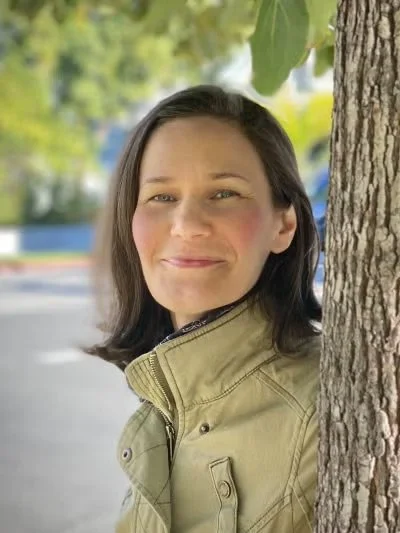
Edith de Guzman
Dr. Edith De Guzman (she/her) is a Cooperative Extension Specialist in Water Equity and Adaptation Policy at the University of California Agriculture and Natural Resources. She is an interdisciplinary researcher, practitioner and educator working with diverse audiences to understand and address the impacts of climate change in under-represented communities. Her work investigates best practices for the sustainable transformation of the Los Angeles region and beyond, and has included research, demonstration projects, public policy and planning in the areas of water management, climate adaptation, heat mitigation, and urban forestry. She tackles these topics through the lenses of urban planning, public health, behavioral sciences, biophysical sciences, and public policy. From 2014 to 2020, Edith served as Director of Research at Los Angeles-based nonprofit organization TreePeople, where her projects included: the City of Los Angeles Stormwater Capture Master Plan; facilitating the creation of a Greening Plan with the communities of Inglewood and Lennox; bringing to fruition multiple urban water management demonstration projects; and producing the first interactive, high-resolution public map and spatial analysis of Los Angeles County’s urban forest. She co-founded the Los Angeles Urban Cooling Collaborative, the Los Angeles Urban Forest Equity Collective, and ShadeLA – each a multisectoral partnership working to make LA livable in a warming climate. In 2023, Edith concluded her PhD studies at the UCLA Institute of the Environment & Sustainability. For her dissertation, she conducted three applied, interdisciplinary studies on climate adaptation and climate health equity using community-based methods. Edith earned a master’s in urban planning from the UCLA Luskin School of Public Affairs and a bachelor’s degree in history and art history, also from UCLA. When not working or studying, she can be found hiking, playing guitar, or curating art & science exhibitions that explore the human connection to the environment.
TRANSCRIPT
Sam Sandoval
Bienvenidos a Water Talk. In today's episode, we're going to be talking with Dr. Edith de Guzman. We will be talking about fire, urban forest, tree canopy, a little bit of environmental justice, and how all of it comes together, and even some artwork that she's doing in collaboration. In terms of the primer, I think there are a couple of definitions that I want to share with all of you.
So urban forests. So, what is an urban forest? This is defined by American Forests as the planting, maintenance, care, and protection of tree populations in urban settings. And then merging this definition with the environmental justice discipline is the canopy that gives cities health and environmental benefits, such as protection from extreme heat. And here the emphasis is on what locations and what have been the policies to have urban forests and any discriminatory planning and investment decisions to have low-income communities with fewer trees. So that will be one portion related to urban forest.
The other one is that we will be talking about a couple of fires. So mostly fires that occurred in 2025. So that will be the Palisades Fire and the Eaton Fire that occurred in Los Angeles County in 2025. Faith, something that I have missed on the on the primer.
Faith Kearns
I think I will probably just remind people of some of the water issues that occurred around the LA fires, it's been almost two years, good year and a half since those fires occurred in January 2025, and a big set of issues around those fires was that people felt like there wasn't enough water in the hydrants throughout both the locations of both fires, that there was depressurization, that there were all these issues around just having enough water for firefighting. And so that's a big backdrop of our conversation is just all the work that has come from that, which Edith, myself, Erik Porse, and Greg Pierce have been pursuing ever since really those fires occurred. So, it's a very ongoing area of research and practice and a really, really interesting and another, just a very emergent issue that you're going to hear more about today.
Sam Sandoval
One last thing is that while the conversation, it really went very fast into LA County, I think for our national audience to consider that a lot of these issues related with wildfires that are also really next to suburban urban areas that are extensively happening throughout our nation, also the same that we have a lot of these small rural systems that are relying independent there that unfortunately now they have to deal more frequently with these wildfires and more severe. So, without further ado, let's talk with Edith de Guzman.
Bienvenidos a Water Talk. In today's episode, we are talking about urban forest, fires, and water with Edith de Guzman. Dr. de Guzman is an interdisciplinary researcher, practitioner, educator, and curator working with diverse audiences to understand and address the impacts of climate change in underrepresented communities. She is a University of California Cooperative Extension Specialist with the UCLA Luskin Center for Innovation, where her work investigates best practices for the sustainable transformation of urban areas related to climate adaptation, shade equity, water management, and wildfire resilience. She was previously a director of research at Tree People. Edith co-founded the Los Angeles Urban Cooling Collaborative, the Los Angeles Urban Forest Equity Collective, and Shade LA, a multisectoral partnership working with LA Livable in a warm climate. Edith, bienvenida. Good to have you here.
Edith de Guzman
Thank you so much for inviting me. It's an honor.
Sam Sandoval
I know that your work is quite transdisciplinary. And after the January 2025 LA fires, you have been part of a UCLA and UC ANR team that studied the vulnerability of small community water systems. Can you explain your findings, the report? And also, you have plenty of recommendations there.
Edith de Guzman
We do. I'd be happy to talk about this. Yeah, so in January of 2025, here in Los Angeles, where I live, we had two simultaneous, very devastating wildfires that turned into urban conflagrations. One was the Palisades Fire, and one was the Eaton Fire. Each of them burnt many thousands of acres and many thousands of homes and displaced hundreds of thousands of people, actually, for a period. And these were real eye-opening events for us.
They're not the first events of the last decade to turn into such urban events, but they created impacts and pointed to vulnerabilities in water systems in ways that really built on some of the recent events of the last decade. So what a team of us did, which actually includes Faith, is we stood up a research and policy network that has been looking at this nexus as these wildfires turn into urban conflagrations and the expectations of urban water systems change insofar as we or the public more specifically expects them to perform to put out these large fires, what does that really portend for the future, given that we do expect more of these types of catastrophes to occur that affect spaces that are that are highly developed and highly populated?
So, one of the areas that we have been looking at is the vulnerability to small community water systems specifically. And whether they're small or large, there are two sorts of buckets that we need to look at. One is during the fires themselves, what is the capacity of these systems to fight the fires? The second bucket is how does the fire affect the systems in terms of water quality and the ability to provide service? Those are kind of temporal, right?
So, the first thing is can they fight the fires? And broadly speaking, we can say these are not systems that have ever been expected to fight such large fires, because these are systems that are calibrated largely around water quality or really wholly around water quality provision for urban users so that there is safe and clean and reliable water. So, when we suddenly expect them to be able to push very high volumes of pressurized water through the systems in order to fight potentially hundreds of structures burning at the same time, there's a real incompatibility in what these systems were ever designed or previously expected to do. So that's one thing.
But I think your question was really about maybe about the latter as well, which was around how does water provision really get affected, particularly in these small systems, these smaller and oftentimes less well-resourced systems. And there what we have is the reality that these fires are burning so extensively and so destructively that we have impacts on the physical infrastructure with pipes and reservoirs being affected. And so, what happens there is that we then have affected systems. They are compromised systems, and Faith has helped us do some really deep work thinking about how do we even communicate these things in real time and ensure that there's trust in the public and who's sharing up-to-date information so that people know when they should not drink their water? Is it safe to boil their water? Does that make it worse if there's volatile organic compounds in the system that need to be flushed out? And when is it safe to begin to drink again? So those are just some of the issues that come up, right?
And what we learned is that small systems are perhaps not surprisingly, really more vulnerable to these challenges that exist in this era of increasingly devastating large-scale fires. And I already kind of alluded to that in part because they are not as well-resourced as some other systems. We had 11 systems that were affected in both the Palisades and Eaton fires and they ranged from extremely large systems like the Los Angeles Department of Water and Power system, which has nearly four million people that are serviced through it, down to much smaller systems that that have been around since for over 100 years and have their roots in in designs that when Los Angeles wasn't as urban as it is now. And so, the impacts that you end up having on one or the other and how quickly those systems can turn around and come back up and stand themselves back up is very, very different. I'm happy to go into some of the specifics of what types of things we're looking at and what some of the potential solutions are, but ...
Sam Sandoval
Yeah, I think it's good. I mean, in the description that you're saying, I don't think that many people know, but there are plenty of small water systems in LA. I mean, I think in your report you quote more than 200, and that some of them they are not interconnected, or that they can be interconnected, and one of the issues is that we have I'm not sure if it is islands of water systems, but these individual ones, right? And a lot of them are also close to what you call the wildlife urban interface. That they are super close and it makes them extremely vulnerable. Would you mind telling us about the opportunities, the solutions that we can have for some of these, I don't think they are isolated. Well, they are individual, but definitely not alone, just surrounded by individual systems.
Edith de Guzman
Yeah, so Los Angeles is perhaps not uniquely, but pretty intensely fragmented. We're not the only place that has that, but Los Angeles County, which has a population of about 10 million people, has approximately 200 community water systems. And again, they really range from ones that serve millions to ones that serve potentially hundreds or fewer, right? In certain cases, it's 25 or so connections. And so, there are inherent challenges that come with that kind of fragmentation, as you alluded to, Sam, some of them are quite rural, some of them are located in the wildland urban interface, which is a more susceptible to wildfire space, right? Because of topography and vegetation and wind speed that those types of spaces attract. And consequently, the solutions look very different in the different places.
So, one of the things that your previous guest and I, Greg Pierce, studied with a team from the UCLA urban planning department, a student team, is what does this look like for the more rural parts of northern Los Angeles County, which are to orient your listeners, this is the part of Los Angeles County that is actually desert. Oftentimes people call all of Los Angeles desert. That's not true, and most of our heavily populated portions of LA and certainly LA City proper are not desert. But we do have communities in the northern part of the county that have quite sprawling footprints in terms of development, and that inherently means that if you were to try to connect, physically connect a small system to another system in the vicinity through physical intertise that would enable you to then bring water in in the event that your system is compromised in some way, that becomes economically and physically very challenging because of the distances that are involved.
When we look at the vulnerabilities that affect larger systems versus smaller systems, which already are typically under-resourced relative to their bigger brothers and sisters, and we stack on top of that the other types of pressures that these systems are under, whether that's resilience to drought and climate change, or improvements that have to be made in order to ensure water quality regulations are met as those regulations change. We quickly understand that the vulnerabilities are really extreme. And that the opportunities to help those small systems when they are geographically sort of dispersed are even more challenging just because of those physical realities and the cost associated with connecting systems across vast expanses.
Faith Kearns
Thank you so much, Edith. It's endlessly complex. And to those of us who are really interested in endlessly fascinating issue that we could probably talk about all day. But I'm going to shift gears a little bit just to talk to you about another facet of your research, which is more around urban forests and urban fires. So, one of the more controversial topics you've been working on is related to this idea of zone zero. This idea that the first five feet around a structure should be free of flammable materials, including vegetation, although there's a little rub in that. So, I'm wondering if you can maybe just talk a little bit about what zone zero is. I mean, I think folks in California probably have heard of it, maybe outside of California, not so much. And so, talk a little bit about what it is, what your research is showing about it and others' research. And then just some of the trade-offs with things like shade and cooling in a place like Los Angeles when we think about fire safety.
Edith de Guzman
Yeah, so let me, I guess, start with what is what are we talking about when we talk about zone zero. So, as we see more and more of these conflicts between wildfire that needs to happen to in some frequency, but the reality that those fires are becoming much more intense, burning hotter, burning larger amounts of acreage and causing damage not only to the natural environment, but increasingly to the built environment. One approach to try to reduce that risk is to reduce the amount of likely to burn material, right? Vegetation is part of that equation, though face as you've already alluded to, it's not the only one, right?
So, the approach that California has taken in the last few years is to consider distances, the zones of distance around a structure, and to apply different regulations to those zones in terms of what is allowable and what is not in terms of vegetation and in terms of other things like fences or decks. And zone zero is the closest. It's the zone within five feet of the structure. And the state of California has just undergone a let's say, highly spirited process over the last it's actually been quite intense over the last 18 months, but it actually goes back further a few years, is really how long it took to come to the current regulation around what can happen and what is allowable within that zone for areas that are designated as very high fire hazard within the state's maps. Your listeners may know that those maps were recently updated and now include many more hundreds of thousands of homes than they used to, while at the same time we have insurance challenges that I won't even begin to speak about, but which are making the viability of living in these zones, in these very fire high fire hazard zones in the wildland urban interface really challenging as we look at the future.
So, the state of California, through the Board of Forestry and Fire Protection, just last month finally passed rules that essentially indicate what can and cannot be allowed within those five feet. And without going into too much detail there, I will say they were very responsive to both public and scientific feedback that came, and the ultimate rule that was passed is quite nuanced and improved relative to what was originally proposed. And now a good portion of it responds to how wide the eve of a home is instead of saying that it must all be within five feet for all of the rules. So, I think on the one hand, it's much more nuanced and responsive. But on the other hand, it also, because of the way that rulemaking is set up here, really puts an expectation on our relationship with vegetation such that we want it to be a very black and white story, and it is not a black and white story.
So, what did we see when we were out on the Palisades fire? I was there in the weeks just after the fire happened, before much of the debris removal was occurring, and then we came back a year later. Oh, this is a longitudinal study. And what we saw again and again is that trees seemed very clearly to have been burned by the buildings rather than the other way around. Now I'm not talking about only zone zero here. Mostly you'll have trees that are not within five feet, right? So, some of them could be on the property or on the public right-of-way. So, we're talking about probably zone zero, I'm sorry, zone one or two in some of these instances.
But what we saw again and again is what's already known and what firefighters will already tell you, which is in these types of events, the buildings really become fuel. These are events where you have temperatures upwards of 2,000 degrees. And it's honestly astounding to see that trees survived. They're really the only witnesses to these events that are still living in many cases. Not that all of them did live, some of them certainly didn't survive. But a surprising number of trees did live, and many of them tell the story of not having contributed to the fires. We've heard stories and Faith, we had a workshop just last week that you were part of, and we had a retired fire chief from Northern California from several of their fire protection districts. And he told the story of his crews, he and his crews taking shelter again and again behind live moist vegetation during ember-driven fires.
So, what we know is that building proximity and building factors such as the presence of fences and decks, those are much bigger predictors of the loss of structures than is vegetation. Why is that? Well, your building materials do not have moisture, and vegetation does have moisture. Of course, it varies, it varies based on species, maturity, maintenance, and amount of irrigation. But I don't know if you or your listeners have ever tried to start a fire with wet wood, but it is not an easy thing to do, right? However, if your building materials are behaving as they should, then they are quite free of any type of moisture. And so, unfortunately, the way that things have played out in this state, the rulemaking is decoupled when it when it comes to rulemaking for vegetation versus rules, and outdoor amenities, as I mentioned, as such as fences or decks, and then rulemaking for the actual structure itself.
And so, the attention has been largely on what's happening on the vegetation side of things. There is quite clear evidence in certain fires that vegetation has had a protective effect. Then you have other fires where you have the opposite signal. So, in the scientific community, I think many of us feel that rulemaking has been trying to advance faster than the signals really from science have been able to provide evidence, right? So, there's a bit of a mismatch there.
But I'll say from my perspective, we do need to think about things more holistically. And while fire risk is tremendously important in this era, so are the benefits that vegetation provides for shade, for energy reduction. You know, we need to have vegetation quite close to the home in order to provide shade and provide shade to air conditioning units and the like. And for slope stabilization rather, and storm water and water capture benefits. So, we need to think more holistically than we have to this point.
Sam Sandoval
Yeah, and I think it's good to listen firsthand about your work on the analysis of water systems, fires, and post-fire. I think it's really enlightening for many of us and our national audience thinking that yeah, whatever we're thinking here, and all this analysis, I mean there are other parts of the state that are also vulnerable to fires and in these conditions, and what are some good lessons learned? And that as you're saying, it's not black or white.
I try to tend to think and good work for the trees and the vegetation, that as you're saying it comes with the moisture. Related with that, I know that you have also done quite a lot of work on urban forest trees and how these trees in the urban setting are located in in different parts of the of the cities. You mentioned that the tree canopy cover is related to income and race, and why is this the case? How have you come to this conclusion? What has your experience been related to urban forests and where they are located?
Edith de Guzman
Great question. So, there's now a really good foundation of research in this country and beyond, but let me talk about what we've learned in this country that shows that the amount of tree canopy cover in the urban area is pretty directly related to income. So wealthier communities tend to have more tree canopy cover, and poorer communities and communities of color tend to have much less. And we're talking about pretty dramatic differences where you can have, for example, in Los Angeles, single-digit percent. So, if you're looking at a neighborhood aerially from above, how much of that land is covered by tree canopy cover? So, it could be in the single-digit percent, so let's say 7 or 8 percent versus perhaps up to 40 percent in wealthier areas, okay? Um, and that has a very large number of impacts.
So, if you have that canopy, certainly on a hot day, you can easily feel 10 to 15 degrees hotter in the less shaded area. But there are lots of other impacts as well. I already mentioned water capture being one of them, but habitat provision for wildlife and lots of public health benefits from respiratory to active recreation provision opportunities, etc. So why is that? Well, there are lots of reasons, but fundamentally, tree canopy is a public good that reflects the amount of investment that it receives. This is different in different climates, but in our climate in Southern California, we have typically cool, wet winters and we have increasingly dry, hot summers, right? And that is problematic because then you don't have vegetation or trees specifically that kind of voluntarily sprout up. You do in more wet climates, okay? But in our climate, we need to provide supplemental irrigation for a period of establishment, which can be three to five years, sometimes a little longer, sometimes a little shorter. And if you don't have that, then you're not going to have healthy vegetation, right? You're not going to have that tree canopy that gets connected to underground hydrology and then can do its own thing. I mean, it's just reality. And that's if you've gotten to plant the tree.
But in some of the communities that have the lowest amount of tree canopy cover, that's also a reflection of how much of that neighborhood is already taken up by other built environment uses, right? So, more pavement, narrower sidewalks that don't allow for tree wells or parkway planting strips to exist. And if they do exist, then perhaps it's only a couple of feet wide. And then the best you could do is plant out a small stature tree that is not going to provide you as much benefit. So, these are all realities that exist here and beyond.
And the type of investment that is needed, it has to come from somewhere. It has to come from government, or it has to come from nonprofit organizations, which in our state do a lot of heavy lifting and a lot of planting. And in fact, in the city of Los Angeles, the bulk of tree planting in the in the public right-of-way happens by nonprofit organizations that receive grants from other outside places and not from the city itself. Or it has to come from community actors, and so it means, Faith, if you get a tree planted in front of your home, it is out of the kindness of your heart that you go out there and water it because these are not typically irrigated spaces. So, they need to be given a little bit of TLC in those first few years.
Those resources differ in different neighborhoods. Um, that's overlaid over the reality of historic practices such as redlining, which even today, more than 50 years after the outlawing of that kind of discriminatory lending practice, we still know that those fingerprints of those types of practices are very evident, where even in the same city, between a neighborhood that was redlined, which was the worst category, and green lined, which was the best category, the neighborhood that's green lined in the same city, this is throughout the United States, you can expect two to three times as much tree canopy today, which of course has also implications about what heat waves feel like and how easily you can you can sort of deal with these increasing intensities and frequencies of heat waves. So that's the reality.
What can we do about it? Well, talking about it and understanding it is really important. I think we are at that point. So, the notion of tree equity and shade equity is something that we understand now in a way that we didn't before. And then prioritizing those neighborhoods which presently have the least amount of benefit from that public resource is something that we're increasingly seeing as well. But we have a long way to go.
Sam Sandoval
For me, I remember you and I talking over UCLA, a National Geographic publication of the different places in LA in the same street that have different cover. That's amazing. Even for surveillance, right? Like there are some of the streets that they get trimmed in a way that can be surveyed by helicopters. And anyway, it's super eye-opening.
Faith Kearns
Yeah, thank you, Edith. Just to switch gears again a little bit. You've done a lot of really innovative work at the intersection of art and science. Can you talk a little bit about your recent exhibition? And I think I also read something about some findings, preliminary findings from that, and then also maybe what you've got in the works on that front.
Edith de Guzman
Sure. Thanks for asking. So, what I get to do as a cooperative extension specialist is think about creative ways to have research inform conditions on the ground and also make sure that the research that we do is actually responsive to what community realities are. So, it's a bit of a two-way street there. But research extension is really the notion that research shouldn't just sit on a shelf gathering dust. How can we engage people, particularly in very tangible types of topics like what we've been speaking about, which really affect their quality of life, right? So, one of the fun things I get to do is dream up ways to engage the public in some of these topics. And one of the ways I do that is through curating art exhibitions, which are science-based and kind of policy-oriented around different environmental topics.
And so, I've done that for the last few years on water stewardship, on shade equity, on climate change solutions. So, the probably the largest show that that I've co-curated, and I should say I co-curate this with my husband, who takes care of kind of the art side of things, while I impress upon him what we are trying to tell in terms of narrative and in terms of content and all of that, right? So, I do more of the science and policy side. So, we had we partnered up with LA's Botanic Garden here, the Descanso Gardens, which receives about a million visitors per year. And last year we had an exhibition called Roots of Cool, a celebration of trees and shade in a warming planet. And we were able to tell the story through art of the past, present, and future of shade equity in Los Angeles.
So, some of what we talked about a couple of questions ago about tree canopy cover. So, what do we do about that, right? So, how can we position people to not only understand their neighborhood better, but understand the problem and where they might fit into solutions? We always incorporate interactive activities of some sort that then give us some data that we can crunch.
And so we just put out a report a few weeks ago that tells the story of what we heard through interactive activities, which included things like having people participate in a survey-like activity where we had posters on the wall and they were able to put stickers to indicate what their perception was about what a most surprising shade fact is, for example, uh, such as in redlined communities, even today, 50 years after the redlining became outlawed, communities still have a third more or less tree canopy if they live in a formerly redlined community, things like that. But we also invited people to do things like writing and drawing, responding to a prompt. So, we had this theme of showing the past, present, and future of shade equity through bus stops. So, what does a bus stop look like in the past or in the future? You know, and so we invited people to help a bus rider wait for the bus in the shade. How would you do that?
We overwhelmingly saw that people prefer nature-based solutions versus built environment solutions. We also saw that people were on balance quite optimistic about the ability to counter very difficult realities that we presently have. So, we were really encouraged by that because it's an easy time to find things to be cynical about, and yet we saw that people responded really, really quite positively here.
You asked also what's in the works. So, we are partnering again with Descanso Gardens next year, May to August. We will have an exhibition all about water, about Southern California's relationship with water. Again, past, present, and future is a theme that we're going to be exploring in terms of how we once were local. Then very locally, the provision of our water needs really came from local sources. The 20th century was really the story of massive, quite impressive engineering feats that brought and still bring water from distant sources, but there are inherent problems with that for these distant places, both ecologically and economically. and of course, with climate change, we can no longer continue to replicate the same type of practices. But also, the future of water.
Los Angeles and the Southern California area have invested greatly over the last decades in conservation, which has produced wonderful results. We are investing in incredible resources and really impressive amounts of energy through programs that look at stormwater capture and providing more opportunity for local water supply augmentation. And really the turnkey kind of ingredient is that California now permits the blending of advanced recycled water into the water supply through direct potable reuse.
And so, it's going to take a long time, but we're on a path that enables us to return largely to local. And so, we're calling that the hero's journey of water for anyone who might be familiar with that narrative kind of archetype of whether it's the Odyssey or Star Wars. You know, you started local, you have to leave home, you go through trials and tribulations, but you return home changed for the better. So that's the journey that we'll be taking people on next year again at Descanso Gardens.
Sam Sandoval
And that definitely is music to my ears from a Star Wars fan. Edith, we started introducing you as a very transdisciplinary scientist. We definitely this episode has gone from fires, water, trees, droughts, art. So, definitely we fulfilled that promise. We always like to end our podcast by asking if there is something else that you want our listeners to know about your work and how can we support your work?
Edith de Guzman
Thank you. Yeah, this has been a lot of fun. I would say one thing that I haven't talked really at all about is the shade efforts that we're leading here in LA. So, my colleagues and I are running a campaign called Shade LA that is trying to leverage the very unique mega sporting event era that Los Angeles is in. We have many, many different events, including the World Cup earlier this summer and Super Bowl next year, and of course the Olympic and Paralympic Games in 2028, we're trying to compel our jurisdictional nonprofit and other partners to really try to advance in and around Los Angeles, both living and built, so both natural and built because of some of the realities that we talked about earlier.
So, I would say that what listeners can do to support these efforts is to advocate for shade where you live, because it's really the next frontier of public infrastructure for the 21st century. And there is a lack of innovative successes out there. So, it’s the number one kind of slam dunk way to improve outdoor conditions and ensure that our neighborhoods can continue to be livable. We cannot air condition ourselves into oblivion. And even if we could, I don't want to live in that world. So, we need to be able to be outdoors and to do so safely. And shade is really the best way to do that. And it can be a reflection of neighborhood creativity and community identity.
I would encourage people to look around their neighborhoods and see where the opportunities are. And the good thing is there's no wrong, well, maybe there are wrong ways to do it, but there are many ways to engage, whether it's private property, public, built, natural. and so, I'd encourage your listeners to think about that and advocate for shade where they live.
Sam Sandoval
Thank you, Edith. Thank you for the conversation. Muchas gracias. And thank you for joining us.
Edith de Guzman
It was my pleasure. Thanks for having me.
Sam Sandoval
What an amazing conversation with Edith, definitely a lot of topics that we touch. I hope that most of you are still following us on that train of thought. Faith, what were the parting gifts? What are some of the key gold nuggets that you can share with us with our conversation with Edith?
Faith Kearns
I really love talking with Edith. I do think she has just such a broad portfolio and set of interests that it's really impressive, honestly. And it makes me, again, so happy to be involved with cooperative extension and to see the ways that people's roles there really can be in these multifaceted careers. So, I just really respect the way that Edith is going about her work.
I would say, for me, this issue of shade is becoming a bigger and bigger one all the time. And so, I really appreciate the work that Edith and other people have been putting into thinking about how we shade our urban environments, particularly right now in very warm places. But I think this is going to continue to be a growing issue over time, the need for shade. And so yeah, I think my parting gift there would just be for people to really learn about, and take on board these issues of shade as we move into a warmer future.
Sam Sandoval
Yes, and for me it was this transdisciplinary, this everything is connected vision from trees, tree canopy, and then the shade, but also how vegetation is more nuanced in terms of fires and fires prevention and the way that she is able to communicate a lot of these complicated or complex and also contentious issues in a way that is very digestible. Like I really got that vegetation is wet and that it might be actually helping you not working against some of the fires, transporting, moving a fire.
Also, I think for me it is not so explicit, but when she talks about visiting right after and then a year after some of the places where we have these devastating fires, while she didn't express it that it was not outspoken, it would have been a lot of emotional weight on her shoulder visiting these sites and seeing the aftermath. And she talks about forensics. I think that was very scientific. But the reality is that as I've been reading some of her work and talking with her, it has a lot of emotional weight on it. Um and as you're saying, like seeing all these different nuance aspects of this. So that was a great conversation. Thank you for joining.