Reflecting on the Flint Water Crisis
“The national conversation has finally transitioned to where it is unacceptable to have lead service lines. It’s time to get them out. The original lead and copper rule was written in 1991. We could have started removing them then. We did not. If we had, we would not be talking about this right now. Unfortunately, we had to have the Flint Water Crisis to finally change the conversation.”
A conversation with Elin Betanzo (Safe Water Engineering LLC) about lead contamination in drinking water, the 2015 Flint Michigan Drinking Water Crisis, and water quality advocacy. Released October 23, 2026.
guests on the show
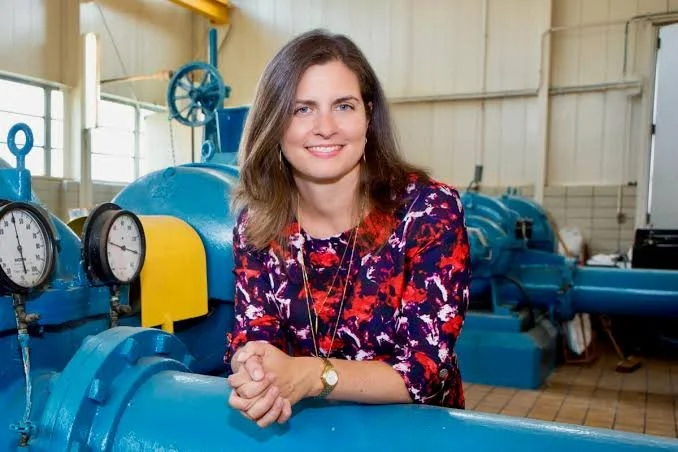
Elin Betanzo
Elin Warn Betanzo is president and founder of Safe Water Engineering LLC, a Detroit-based consulting firm working to improve access to safe drinking water through engineering and policy consulting. Elin is a Professional Engineer registered in Michigan, Maryland and Virginia, and a certified water system operator in Michigan. She has nearly 25 years of experience working on drinking water science, engineering, and policy issues. She worked for the U.S. Environmental Protection Agency in the Office of Ground Water and Drinking Water writing and implementing national drinking water regulations, for the Washington Suburban Sanitary Commission where she led water system master planning and hydraulic modeling, and for the Northeast-Midwest Institute leading their Safe Drinking Water Research and Policy Program. In August of 2015, Elin played a critical role in uncovering the Flint Water Crisis working with Dr. Mona Hanna, a Flint pediatrician, to conduct a study that discovered elevated lead levels in children living in Flint, Michigan. In addition, she contributed to the U.S. EPA's response to the Washington DC lead crisis in 2004 and supported the Benton Harbor community through technical analysis through their lead crisis starting in 2021. Elin’s data analysis and technical expertise were a driving force behind the new Michigan Filter First requirements for safer school drinking water. Elin continues to work on lead and drinking water policy at federal, state, and local levels.
TRANSCRIPT
Mallika Nocco
Hi, Water Talk listeners. Today we are talking about something that I think those of us who are millennials for sure are going to remember very clearly, just as a historic kind of case study about water equity. And that is the drinking water crisis that happened in Flint, Michigan. And this is something that happened when the town of Flint, Michigan, they switched their drinking water source. And it happened a little over a decade ago.
The city switched their drinking water source from Lake Huron to the Flint River. And what ended up happening when they made that switch is there was a change in water source. And then there was a change in some of the treatments that were used to reduce the contamination. And so they had to treat the water from the Flint River, and those treatments ended up causing corrosion of lead pipes.
The corrosion actually caused more lead to be present in the drinking water to the community. And this basically created a drinking water crisis. And the areas in the community that were most impacted were the older parts of town or parts of town where they're in parts of town that had vulnerable populations from a socioeconomic perspective.
So today have an opportunity to talk to Elin Batanzo, who is one of the people. She is an engineer and an activist, and she has expertise in policy, but she's one of the people who actually first worked to recognize and create a response to this crisis. So we're really honored to have her here today and to think about just lead and water, drinking water policy and drinking water infrastructure. Sam, do you have any additional thoughts about what our audience needs to know before we talk to Elin
Samuel Sandoval
Yeah, one of the things is the so what does lead cost to our human bodies? And basically, lead is not absorbed or degraded in our body, so it will stay there, goes into the bloodstream, and it can cause neurodevelopment. What that means is that it will affect the brain and the ability to learn. This is more acute in children and infants. So why is that? Because basically, when you're preparing the formula with drinking water from the tap, basically you are taking all the lead in there and the damage persists through the lifetime.
So that is, as adults, don't get me wrong, we also can get some, but our bodies are a little bit larger and our brain has developed. And this is just one of the many issues that lead can cause. And also the other thing to remember is that there is no safety limit for leading in drinking water. There should be no lead in drinking water. So, anyway, I think those are the two things that I think we just need to know before getting into our conversation.
Mallika Nocco
I think we'll hear Elin talk about this too, that there's just lead offers no benefit to our human bodies. Like any bit of lead that makes its way into our bodies, and like you were saying, Sam, infants and children are the most vulnerable. Any of it is bad for our neural development.
And I guess maybe the other thing to consider with this is we know now that we don't want lead in our water, any lead in our water. But we also have many cities and neighborhoods and parts of the country where there's lead pipe that's used to transport water. So a big move to getting away from these situations where we have like a bad mix of a water source, a water treatment, and lead pipes is to actually upgrade and get rid of lead pipes. So that's kind of one of the solutions that you'll hear us talk about as something to move towards too. All right, without further ado, let's talk to Elin.
Welcome to Water Talk. In today's episode, we are talking about the Flint, Michigan water crisis, drinking water infrastructure, as well as scientific advocacy and ethics around public health issues. Today we are talking with Elin Batanzo, the president and founder of Safe Water Engineering LLC, a Detroit-based consulting firm working to improve access to safe drinking water through engineering and policy consulting. She has nearly 25 years of experience working on drinking water science, engineering, and policy issues. Elin is a national thought leader on lead and drinking water policy at the federal, state, and local levels. And she's played a critical role in uncovering or responding and supporting public-led crises in the Washington, D.C. area, Flint, Michigan, and most recently, Benton Harbor, Michigan. Elin, welcome to Water Talk.
Elin Betanzo
Hi, thank you for having me.
Samuel Sandoval
Elin, welcome, welcome. And I have to say a huge fan of your work. And thank you for being today with us. And you know, you have a lot of amazing skills. So not only an engineer, an activist, but I would say a very ethical person. And that is an interesting kind combination of superpowers and abilities. So can you tell us a little bit about your origin story? And first time you started to get more interested in the policy side of drinking water infrastructure.
Elin Betanzo
Okay. Well, when I was growing up, I always wanted to do environmental work. So I got a degree in environmental science when I went to college, but I still really didn't know what I wanted to do. And so I did what made the most sense. I got a job at the EPA, the Environmental Protection Agency. Because it has it right there in their title, right? So I was working at the EPA. I got a position in their drinking water office. I was pretty new to the drinking water office. And I lived in the District of Columbia and I worked for EPA. And in January of 2024, there was a headline in the Washington Post that said that DC water had been covering up lead in their drinking water for years. And so this was kind of my first big introduction to lead and drinking water. And the next day when I went to work the next morning, my boss, you know, we'd all been reading the headlines and paper newspapers were the thing that you read. And my boss said to me the next morning, can you please research whether drinking water has ever been known to be a source of lead poisoning in children? Because you've seen this headline. There's lead in the water, but it does it cause any harm. We're always talking about lead and paint.
I was confused by that request because I was like, they're already violating a drinking water regulation, which was clearly made for a reason. Like, I think we need to focus on compliance with the rules. Why do we need to find out whether people have been poisoned by lead in their drinking water before? But I could see that this was an important assignment. I took it really seriously. I went to the EPA library and I spent, yeah, I spent a lot of time, you know, trying to find documented cases where lead in drinking water was a source of lead poisoning. I could only find one.
And now that I've been doing this for years, I understand now that the reason for that was because of how we sample for lead in water, how we research elevated blood lead level cases, and how pretty much anytime lead and paint is found, that's just the source, that's the source of lead poisoning. We move on. For the longest time, we didn't even do any water sampling at an investigation. So that was an important piece of information that I found there.
Then we went on to the response, the EPA response to the DC lead crisis. There were congressional hearings, there was outrage, everybody was very upset. I got to be selected for the small group of EPA employees who were in these multi-jurisdictional meetings to try to figure out what happened, you know, who is harmed and what do we do next. And so I was sitting in the room with all the big decision makers when the CDC, the Centers for Disease Control, came in and said, well, hang on a second. We've done a study here for Washington, D.C. that shows that no children were harmed from lead in their drinking water. We've got all the data. It's right here. And they published a report in April of 2004 stating that no children in Washington, D.C. were harmed by lead in their drinking water. That's kind of when things closed down. We're like, yeah, it's not a big deal. Nobody's harmed here. EPA made a few short-term revisions to the lead and copper rule, but pretty much you know, shut down the media and the public talk about the DC lead crisis right there.
Mallika Nocco
Yeah, and it's wild because you also had that historical like lack of data on that to kind of give everyone like a false sense of security.
Elin Betanzo
Right. And so I was the young engineer in the room. I was one of the youngest people there. And so I was like, wow, I'm here with all these smart people. They know what they're doing. And wow, I can't believe that this could happen, but this is what's going on. But I didn't have enough knowledge or experience about lead and drinking water to be able to poke the holes in everything that they were saying to gloss over the problem.
So then in 2010, CDC released a correction to that report. It said, well, sorry guys, actually, we excluded thousands of records from that analysis. And when we actually do the real analysis, there's hard proof here that the children that were living in homes with lead service lines absolutely had higher blood lead levels. And there was absolutely an impact on their lives. And oh my gosh, when I read that report in 2010, I was crushed because I was in the room where those decisions were being made. And I felt like if I had, if I had known better, I could have done better. We could have had the opportunity to provide interventions for the residents of Washington, DC. And I was part of that cover-up. And so that was a huge thing in the trajectory of my career. So that's when I decided, wow, I really need to pay attention to this going forward because you know, we keep completely missed everything in the DC-led crisis, and I don't want to ever be a part of this happening again.
Mallika Nocco
Yeah, and like what a big thing to happen as a young engineer, too. That's wild. So kind of moving on in time, like we did provide our listeners with some context in our primer about the Flint water crisis, especially. I can't believe we have some young folks who don't remember anymore. Like I'm seeing them in my classes now. So it's so fortunate and we're so lucky to have you on as someone who was there firsthand in the discovery and the recognition and the response to what was going on. So, can you just share with us your first hand reflection of what happened with the Flint water crisis about a decade ago?
Elin Betanzo
Right. So, kind of continuing that little story from before, in 2014, I was attending drinking water training in Michigan. And a consultant gave a presentation. They said, guess what? This week we're changing the source of Flint drinking water from Lake Huron to the Flint River. And I sat there and I listened to that and I said, wow, that's crazy. Why would anybody switch from one of the most pristine water sources in the world to the Flint River? That just doesn't make any sense. But I said, well, thank goodness after the DC lead crisis, we made some updates to the federal lead and copper rule that would require them to coordinate with the state on their corrosion control treatment before making a big change like this. And so we shouldn't have to worry about what's going to happen in Flint.
But I, you know, kept following the headlines and following what was happening there because I already saw the writing on the wall here. And so then later that year there were violations, there were disinfection byproduct violations, people were having press conferences holding up bottles of brown water. And then in 2015, former colleague of mine at EPA, Miguel Del Toro, wrote an internal memo that just kind of laid out his argument for why he thinks there's a huge lead problem in the city of Flint. There was no corrosion control. The thing that I thought was going to happen never did happen. So that's when I knew this is it. Everything that I thought could go wrong here actually went wrong in Flint.
Mallika Nocco
And my understanding too is that this corrosion control issue is we have this older infrastructure with pipes that have lead and copper in them. And then we try to treat water with chlorine, right? And the chlorine releases that lead. Am I getting that right?
Elin Betanzo
Well, actually, in a system that uses free chlorine, the chlorine itself can actually provide a pretty protective layer in the lead pipes that creates a lead oxide. But not all chlorinated systems and especially an old system like Flint, the chlorine gets used up, it dissipates. It's not providing that type of protection throughout. And so with all the water quality changes they had when they switched to the Flint River, all the protection that had been on the pipes was stripped bare.
And so then once I understood what was happening from the chemistry side, I knew based on DC, the only way anybody would pay attention is if we could prove that children were being harmed. And so then what I did, I was just kind of thinking about it, but then one day my friend invited me over for dinner and we were talking about life, and she was talking about her commute to the hospital in Flint where she worked, and I realized that where she worked, she could have access to all of the medical records of children in Flint that the state of Michigan wasn't releasing. So I asked, I did a little education there because she hadn't really didn't know about lead and drinking water because in her medical training, she'd never gotten any background on this, even though she works with children and lead poisoning all the time.
But once I explained what was happening in Flint and how she could use her position at the hospital to do an analysis to find out whether children in Flint had higher levels of lead in their blood after the water switch, she went ahead and did that. She started the very next day and she published her results within a month. And that is how we changed the whole conversation about Flint. Up until then, the state had been denying the whole thing. And then once she released her report, they said, oh, she must have her data wrong. But then we had more independent analysis that proved that she was right. And that's when we started to talk about actually addressing the water quality and addressing the health impact in Flint.
Samuel Sandoval
Uh, what I wanted to ask is, would you mind explaining also the harm that is to have lead on in the drinking water for some of us novice that want to know, like here we are very vividly talking about it. What are the health harms?
Mallika Nocco
That's true. We just kind of started going, like assuming everyone knew that lead in your drinking water is bad, but maybe we should take a step back.
Elin Betanzo
Right. So there is no safe level of lead in the body, and so the health impacts from all sources of lead exposure are the same. It's the same for drinking water. There is no useful purpose in the body, like in contrast with copper in small amounts, it is beneficial, but lead is a toxin at all levels. You cannot see, smell, or taste lead in drinking water, which means that when it's there, you don't know that it's there.
And then another fact is you know, in contrast with other sources of lead exposure, like the majority of them, no one was ever intended to eat paint off the walls. No one was ever intended to eat contaminated soil. But the purpose of water in our pipes coming to our homes, it was always to drink. Right. And so it was always intended for human consumption.
So that lead interferes with the brain development. It's most harmful for children from zero to six, but it does have more and more, we're getting more documented health impacts at all ages. And when we have lead with a lead service line is a solid lead pipe. It's not even mixed metals, it's a solid lead pipe. And you know, so when you're drinking water from that and you're exposed, you can be exposed for your entire life.
Samuel Sandoval
Yeah, and the development of the brain and people reducing their IQ, and like literally, you get a lot of these long-lasting effects, and that if the lead cuts into your tissue, then it later can be released. So it went from active to inactive to active again in the bloodstream. I don't know. I encourage our listeners to also do their own research, but this is this is quite damaging life-wise.
Elin Betanzo
There have been a few recent articles that I don't know if you provide links along with these, but there has been some like within the last month, some good publications about it.
Samuel Sandoval
Yeah. Cardiovascular and I anyway. Elin, pun intended, I want to ask you two questions the half full and the half-empty glass. So from these experiences that you have had, what are some of the lessons learned from the Flint Michigan crisis that have been implemented? And on the half-empty, what is the work that we still have to do?
Elin Betanzo
Yeah, so with the Flint water crisis, you know, leading up to Flint, there had been a lot of work by the water industry to avoid and deflect drinking water as an important source of lead exposure. So working with Dr. Mona, my friend in Flint, we've been able to do some of our own publications and additional research that's really documented the extent of lead and drinking water, the ways in which the lead and copper rule had been covering up lead exposure.
I think the national conversation has finally transitioned to where, yeah, it's unacceptable to have lead service lines. It's time to get them out. The original lead and copper rule was written in 1991. We could have started removing them then. We did not. If we had. We wouldn't be talking about this right now, but we needed to have the unfortunately, we had to have the Flint water Crisis to finally change that conversation.
So in 2024, the EPA finalized the lead and copper rule improvements. And so for the first time ever for the entire country, there is a requirement to identify and replace every single lead service line in the country by 2037, which is a huge deal. That doesn't address all the sources of lead in drinking water, but is the most important and the most avoided and the most covered up source of lead.
Mallika Nocco
It's just a move in the right direction, at least.
Elin Betanzo
Right? Yeah. And then it also came with funding. It came with five years of funding to work on removing those lead service lines, but that funding has run out. That allocation is complete, and it would be best for everybody if there was more additional funding for that going forward. But just we have a requirement. Water utilities are working on it, and we finally have this recognition generally that they are harmful. I do occasionally still see water industry folks trying to avoid responsibility, which is still concerning, but with there's been a huge change over the past 10 years.
So you had another side of the question. And so one thing that I saw in the Flint water crisis from 2014 to 2015, the news media really accepted the word of the water utility and the state of Michigan, reassuring everybody that the water is fine. They took that at face value. There was a little bit of probing to see if there was really data to back that up, but for the most part, it was just accepting the public statement from the water utility. And so Dr. Mona and I were able to work together to prove that that was not true at all.
And so just generally speaking, we have poor transparency around drinking water data. It's very difficult to get access to it. Michigan still is about the bottom of all of the states for access to drinking water data. Other states do have some ways to get better access. We don't have that in Michigan. But when you take the lack of transparency with all the newsroom cuts that we've been having lately, I keep seeing more and more so many media articles, all they do is reiterate the public statement from the water utility or the state saying our water is fine, our water is fine.
I think the problem that continues to persist is we need to probe that. We need to get data to back it up. We shouldn't be just accepting them at face value. And if the data back up their statements, they should feel very free to share it. They should be pushing out their data at the same time as they are assuring that the water is safe. And so the first thing anybody, media or otherwise, if the water utility is saying the water is safe and not providing any receipts, you question it. And so it's become my hobby to submit Freedom of Information Act requests. Um, that's what I do. But so much of the time when I hear about a drinking water issue, the information to backup claims is not available. And that's what's critical for us to build trust and reliance on the safety of our drinking water.
Mallika Nocco
Thank you for that, Elin. And I that's hilarious about the hobby part of it. So it has been over 50 years since the Safe Drinking Water Act was passed. And recently I was seeing in the news that I was reading, you know, there's these headlines that we basically we don't have a constitutional right to safe drinking water. And I think kind of between these two things, it's just very confusing to understand like what how our protections are right now. So I was curious if you could talk a little bit about what, if any, what are the current federal protections for drinking water right now?
Elin Betanzo
Okay, so yeah, that recent legal decision does kind of get into the weeds. Uh, so I'm not a lawyer, I won't go too deep into that. But what it ultimately says, you know, the constitution doesn't provide that, right? So some states do have it explicit. So now we're kind of in a two-tier system. The states that have called that out explicitly do have a right to safe drinking water, and those that don't, good luck.
We do have the Safe Drinking Water Act, it applies nationally. So EPA sets water drinking water regulations for the entire country, and some states have a requirement that they cannot have any additional requirements about drinking water, they can be no stricter than federal. But then there are other states that can do whatever they want, they can be as stringent as they want, and they keep adding.
Michigan did add requirements under the Michigan Lead and Copper rule after the Flint water crisis. So there's an example of that. But generally, the Safe Drinking Water Act, it's all we have. And so for that, I'm grateful. I think there are many ways we could improve the Safe Drinking Water Act. For a lot of times, you're probably hearing sound bites that water utilities sample for 100 contaminants. Sometimes they'll say every day. Very few do that every day, but the very large ones do. Most water utilities are sampling one day a year. And especially for a surface water source where you've got a flowing river and the water quality is changing every minute. Who knows what? When contamination sources upstream are releasing contaminants, one sample a year just doesn't cut it, especially in this day and age with how much data we have about literally every other aspect of our life.
I don't feel like one sample a year is really telling me anything about the safety of my drinking water, especially like for example, I see you know, we have requirements for pesticides. A lot of times that one sampling date is not during the time of year when they're applying pesticides. So that doesn't give me confidence. That no yeah, that doesn't give me confidence either. That no detect result means nothing if it's just one day a year and it's not during the time that they're applying to fields. So that's just like one example of some of my concerns about the Safe Drinking Water Act. But don't get me wrong, I don't want it to go anywhere. I want to keep what we have, I would love to work on improving it.
Mallika Nocco
It is interesting that depending on the state that you're living in, you might have like vastly different drinking water quality.
Elin Betanzo
We have some states that have had PFAS maximum contaminant levels for years now. Michigan's one of them. But yeah, we've got other states that are going to wait until the federal MCLs become effective.
Samuel Sandoval
Yeah, that is that is actually as you're saying, really.
Mallika Nocco
Speaking of PFAS.
Elin Betanzo
Yes, and we had a previous episode with about talking about PFAS forever chemicals where we talked about science communication efficacy and safety about these very difficult topics because we're talking about risk, danger, but at the same time you want to be effective on your communication.
So you were involved with the federal policy around setting the limits for the chemicals. Can you tell us a little bit your role in public communication and how it shifted?
Elin Betanzo
So to be clear, I worked on public comments on the rule and I was focused a lot on costs and um then the delay rule that came out that was proposed this summer.
Mallika Nocco
What was the delay rule for just for our listeners to clarify?
Elin Betanzo
So in 2024, the EPA finalized the PFAS rule, which included maximum contaminant levels for a handful of PFAS contaminants. And then this summer, the Trump administration put out a proposal to delay the effective date of those MCLs by two years.
Mallika Nocco
Why wouldn't, I mean, not just to be like a little devil's advocate and maybe to be just like falsely innocent, like why would that delay take place? Like what would be good about that delay? Is there anything? I mean, I'm very like, I can't understand why we would have that delay, but is there something I'm missing?
Elin Betanzo
So some of the justifications that were in that proposed rule were that it would provide more time for technology to develop so we could have more cost-effective ways to remove PFAS contaminants, and it would give water utilities more time to staff up and find funding to install it. But when I did the analysis of what they were claiming and the timelines for which these things usually happen, it was going to end up increasing costs and increasing exposure, of course. Yeah by two.
Mallika Nocco
That's the part that's wild to me is like why would we risk the increased exposure?
Elin Betanzo
Right. Um, but the math just doesn't work out, doesn't make sense. There was increased funding from the Biden administration to install treatment for PFAS contaminants, but if you waited those additional two years, that funding would all be gone by the time that you're finally, you know, rolling those into effect and need to install the treatment. So the timelines there just don't add up and it ends up being a lose-lose situation, both for water utilities, because now they've got competing deadlines, a lot more competition of how do we communicate clearly to the public. It's safe now, but it won't be safe two years from now. And tricky, the same levels, right?
So it just makes everything more complicated, it delays public health protection, and in many cases will actually drive up costs. But we need protective MCLs, we need that for PFAS. It ends up being a challenge and sometimes a conflict in the water industry because we want to provide contaminant-free drinking water, but the treatment costs money. And it really should be the companies that are manufacturing PFAS contaminants and releasing them to the environment that should be paying for that treatment. But so far, we do not have that mechanism in our water infrastructure planning. You know, the courts aren't doing well. We're in a situation where the manufacturers and polluters are the ones being protected right now by the Trump administration.
Samuel Sandoval
And Elin, I think also a lesson learned, or something that I'm just seeing repeating is that in Washington we have some good leads, we wait some time, we found the issue, but people were exposed. And then in Flint, Michigan, we find the lead, we wait some time, we confirm it, but people were exposed inside their house.
Elin Betanzo
Right? Irreversible neurotoxin. You can't, once the exposure has happened, you can't go back.
Mallika Nocco
So I guess when this stuff was happening, Elin, like how did you handle that in your role or like what kinds of communication methods did you use? And like what were some of the anticipated or unanticipated consequences?
Elin Betanzo
So the water industry when they approach communications, their kind of first motto is don't cause panic. But I think providing accurate information is the most critical of all. People need accurate information so they can choose to protect their health. When they're not provided accurate information, you've got no options. And so, you know, with Flint, we've had to make a lot of modifications to how we communicate about lead and drinking water because the majority of water industry literature is defending and deflecting the responsibility for lead and drinking water.
And none of that language provides proactive protection because every day you're drinking lead is a day you can't undo. The most important thing is to prevent the exposure as soon as possible. It's another issue with the lead and copper rule improvements. We're still not doing proactive communication. Uh, everybody with a lead service line could be using a certified lead reducing filter. We have the technology today that nobody needs to be drinking their drinking lead and their drinking water. Nobody. Um, but yet every single day there's millions of people across the United States who are drinking lead in their drinking water because they don't get good information from their water utility.
So personally, I am always working on trying to get ahead and start the health intervention first. And then work on correcting everything next because we need to cut off the exposure as soon as possible. But generally, that's not how compliance with the Safe Drinking Water Act works. Uh, a lot of time you have to, a water utility has to violate the rule. They have to have the opportunity to try to correct things. And it's not until you know months, possibly years after an issue has happened, that they have to do anything to provide an intervention for its customers. That's not public health protection. We need to totally shift that conversation. When we think there's a water quality problem, the first thing we need to do is how do we get safe drinking water to this community?
Mallika Nocco
Yeah, it really seems like there's some odds at hand there between the ethics and the public health and then how to act or what the workflow should be. So, Elin, we always like to ask our guests if there's anything more you want people to know about your work and your efforts. But before we ask that question, I have another question that I just thought about, which is I think it's really interesting that it like the way in which you've worked and the this the initial part where you kind of worked with Dr. Hannah and Flint to figure out the crisis and what was going on.
Are the two of you just like friends? Is that how this all came about? Are you like friends from college or friends from high school?
Elin Betanzo
I just think high school.
Mallika Nocco
That's so cool. I thought I read that somewhere and I just wanted to ask, it's just really neat to me that like a friendship from when you're so young could result in this transdisciplinary partnership. So I was just wondering if you, you know, if you could speak a little bit to that those moments when you're like, oh my goodness, I'm friends with somebody who does something really different from me, but we can collaborate in this space and what that was like.
Elin Betanzo
Yeah, yeah. We've been friends since high school. I think we met the first day of high school and we were in the environmental club together back then. But yeah, we were just, you know, getting together with our kids in August of 2015 and you know, just chatting about our work day. And when she just kind of reiterated that she is a pediatrician in Flint and she drives to the hospital. And I was like, hey, stop right there. We're going to start over and I'm going to give you a big project that's going to change your life. I didn't know that at the time, but it did.
Mallika Nocco
That's super, super interesting to me. And just like thinking to our listeners of how just being open to teamwork and being open to finding teammates in the strangest of places or in the most familiar of places, even. I really liked that part of your story.
Elin Betanzo
Whenever I'm doing a presentation, especially for a class of young people, I always say, look to the left of you, look to the right of you, shake hands, share names because you never know how these people are going to help you um solve problems in your future.
Mallika Nocco
Yeah, absolutely. Or where in the world everyone's going to end up too is really interesting. So yeah, thanks for commenting on that a little bit. But yeah, we always want to ask our guests if there's any more anything else that you want people to know about your work and how we can all support your efforts.
Elin Betanzo
Yeah, well, another interesting thing that I've been doing, I was on the National Drinking Water Advisory Council. That's a committee that provides advice to EPA on drinking water. It was created with the Safe Drinking Water Act. And I've been on it since 2021, but in 2025, I joined hundreds of EPA employees signing their letter of dissent. And we were warning that EPA's actions under the Trump administration were posing a serious threat to public health. Two days later, EPA suspended me and nearly every other signatory they could identify. And then also they announced agency-wide zero tolerance policy. So anybody at EPA cannot say anything that is contradictory to the priorities of the Trump administration.
So since I was fired from the National Drinking Water Advisory Council, I am suing the Trump EPA. I'm challenging my dismissal and their illegal zero tolerance policy. The administration is trying to scare public servants into silence. But as I've been saying through this entire interview, the public needs the opposite. We need more truth, more transparency, and more people willing to speak up when health protections are being dismantled.
Mallika Nocco
Well, thank you for sharing that. And I mean, I will say we really admire your courage. And it is it is scary to hear that if you speak truth to power in some of these rooms right now, that you're almost like not allowed that that privilege to speak truth to power and to just think about who is allowed to speak truth to power about these matters that are so important for all of us. You know, we all drink water and the idea that you don't necessarily control your water quality, you live where you live, you know, and so that that's very disconcerting, but we are very thankful to you for just your superhero advocacy, your work, and your willingness to speak truth to power. Thanks for joining us. Yeah, we appreciate having you on Water Talk today.
Well, that was a really interesting and powerful episode that we just did with Elin. Sam, what are some of your parting gifts?
Samuel Sandoval
I think for me, well, there are two parting gifts. The first one is the lead time, once again, pun intended. No, it is that so in many of these cases we are seeing the evidence that we may need to pause, and she mentioned that sometime better be safe than sorry, or that we had it sometimes, and then she actually talks about the that people were exposed for a long time when it could have been prevented. So that to me is a parting gift that many times and when we're talking about things like drinking water, even sanitation, let's just be first a little bit more cautious about it.
And the second thing is when I asked her about those difficult moments when she's seeing all of this, she basically like please give us some feedback or leadership advice. And basically she went back to do your homework, like really go back, get the data, make the case, and then present it and be um upfront about it. And for me, those two things are really good.
Mallika Nocco
I feel like the message was if you are going to speak truth to power, which she did over and over again, be ready with your truth, right? Like, and if you're a scientist or an engineer, have the data, have the records, have the data. That was really powerful to me too. Just the courage required and like what to do to help, I think, develop that courage in these types of public health crises is really important.
The other thing that just stuck out to me is I think it's really I really valued and loved the friendship part of it between her and Dr. Mona, who they kind of to get work together, a physician and an engineer with specialty in drinking water to figure this out and how they were high school friends. Like just this idea of making sure you keep track of your network and you stay in touch with your friends and you never know where that might lead is something that I think is a powerful part of that story for sure.
Samuel Sandoval
So and you know, following on that, also being on the moment, because I'm assuming that when she meets her friend, it is in her mind all this development of all the lead and what the lead is causing, and then you encounter a friend, right?
Mallika Nocco
Yeah, true, like seizing the opportunity and going for it.
Samuel Sandoval
Yeah, yeah, and being on the moment and yeah, listening. And so I think that one is it's also good on our life experience-wise, that sometimes we also need to just be there and listen to our friends.
Mallika Nocco
Absolutely. Well, thank you so much, and we will talk to all of you next week on Water Talk.