Small Farms and Groundwater Policy in CA
“The Sustainable Groundwater Management Act talks about six undesirable results or what we need to avoid, and we are introducing a seventh one—The widespread loss of small farms.
”
“If a million acres were fallowed and it was not done strategically, you would see increases in Valley Fever. You would see increases in dust. You would see huge impacts on people’s health.
”
A conversation with Ngodoo Atume (University of California Sustainable Agriculture Research and Education Program) and Judith Redmond (Full Belly Farm) about California's Sustainable Groundwater Management Act and its impacts on small, family farms in the state. Released October 2, 2026.
guests on the show
Ngodoo Atume

Ngodoo Atume is the SGMA Technical Assistance for Small Farms Academic Coordinator at the University of California Sustainable Agriculture Research and Education Program. In this role, she is coordinating a technical assistance and extension education program to provide small-scale farmers in California with technical information, services, policy analysis and recommendations needed to engage in the implementation of the Sustainable Groundwater Management Act (SGMA). Ngodoo is interested in the equitable consideration and protection of groundwater users in California. Ngodoo has a technical background in Water Resources and Environmental Engineering from Ahmadu Bello University in Nigeria and an MS in Sustainable Water Management from Tufts University.
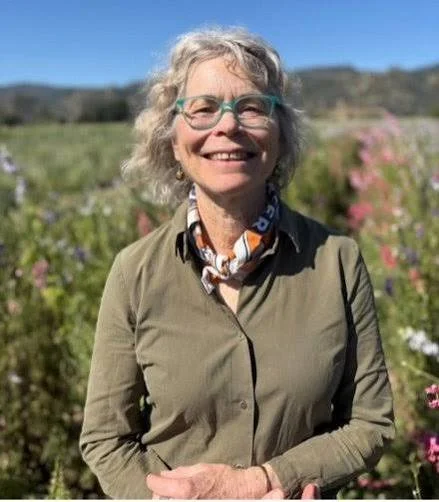
Judith Redmond
Judith Redmond is a co-founder of Full Belly Farm, a highly respected 400-acre certified organic farm in California's Capay Valley. For over three decades, she has been a leading advocate for sustainable agriculture, farm labor justice, and equitable natural resource management. Her work focuses on groundwater advocacy and reform, where she champions the needs of small-scale family farms facing climate and regulatory challenges. Judith dedicates a lot of time participating and coordinating activities to empower the next generation of leadership. Judith serves several community organizations as a volunteer, including the California Climate and Agriculture Network and the California Department of Food and Agriculture’s Scientific Advisory Panel on Resilient and Sustainable Agriculture. She is the chair of her local Capay Valley Fire Department Board of Commissioners and is on the leadership team of the Capay Valley Emergency Response Auxiliary.
TRANSCRIPT
Samuel Sandoval
Bienvenidos a Water Talk. Today we're gonna be talking about groundwater management, in this case, the specific case of California, the Sustainable Groundwater Management Act, and small farms. So some of the concepts that I want to bring are the definition of a small farm. And you may think that is by acre, but it is not. It's actually by gross cash farm income. So how much money a farm is receiving per year? This is defined by the United States Department of Agriculture and is $350,000 per year. And the other part is that small farms, specifically for the University of California cooperative extension system, is defined as also farmers that are doing operations in diversified farms and produce that are direct marketed, beginning farmers and socially disadvantaged farmers.
So on that side, we're gonna be talking about small farms. So think of it as small, typically family farm, and most of them are from groups that are either African Americans, Asians, Hispanics, Native Americans, and so on.
The second refresher is on the Sustainable Groundwater Management Act. Remember that this was a law passed in 2014 because of the groundwater overdraft, land subsidence, seawater intrusion. And basically, this law is implemented by so-called GSAs, groundwater sustainable agencies. And they create these plans to avoid six undesirable results, but in essence is to avoid groundwater overdraft, to prevent groundwater pollution, and to prevent the disconnection of rivers and aquifers. So those are the two things that we're gonna be talking with, Ngodoo and Judith. Anything else that I miss Mallika Faith?
Faith Kearns
I would just say, from the beginning of conversations about SGMA and its origins, that this issue around small farms has been there since day one. And so, just kind of listening to where it is now is really, really interesting. And I feel like people have been putting a lot of effort in on this issue for the past dozen years. And so, it's just interesting to see the progress there.
Mallika Nocco
Yeah, I would just say we were chatting about this a little bit, and we've done so many episodes that touch aspects of this topic. I do want to point out if people are interested, we talked to Dr. Ruth Dahlquist Willard in episode nine, way back in season one, and that was about small farms specifically, and of course, SGMA in relation to them. And then we've done a couple of episodes related to this issue of governance in small farms and who participates in governance and who potentially is left out and why. So we have several episodes kind of related to that. But the other one that kind of comes to mind is episode 12, which was also in our first season. So if you want to check out any previous episodes about these topics, they're definitely there, but we don't didn't want to assume that everyone remembers what was going on way back then.
Samuel Sandoval
Yeah, and just to add also to keep in our listeners' mind that small farms, so agriculture is not monolithic, you're gonna hear about it, and that this is a specific type of agriculture, small farms, typically family farms, and also the invisibility. That as we've been talking in other episodes about how disadvantaged communities sometimes are invisible to certain regulations or not fully considered in terms of decision making on their plans, and this is going to be something relatively similar, parallel with small farms. So, without further ado, and let's listen to Ngodoo and Judith.
Bienvenidos a Water Talk. In today's episode, we're talking about groundwater management, specifically the Sustainable Groundwater Management Act in California and how it has affected small family farms with Ngodoo Atume and Judith Redmond. Ngodoo Atume is the SGMA Technical Assistance for Small Farms Coordinator at the UC Sustainable Agriculture Research and Education Program for the University of California Agriculture and Natural Resources. Ngodoo coordinates a technical assistance and extension education program to provide small-scale farmers in California with technical information, service, and policy analysis.
Judith Redmond is a co-founder of Full Belly Farm, a 400-acre certified organic farm in California's Capay Valley, really close here to Davis. For over three decades, she has been a leading advocate for sustainable agriculture, farm labor justice, and equitable natural resource management. Judith is an advocate for small farm family, farms, climate and regulatory challenges. So, Judith, we have now a national audience, and it will be great if you can describe what is the make of small farmers and why they are so important. So if they own the farms, if they are tenants, how much groundwater they use compared to others. If you can elaborate.
Judith Redmond
So, they're the farmers that you see providing food and flowers at farm stands or at farmers markets. They grow a lot of really unusual crops, or what we call specialty crops, and that are important to the health and culture of immigrant communities. These are crops that aren't really available elsewhere, like in regular grocery stores. A lot of these farmers are African American, Asian American, Hispanic communities. And so all of that is important for creating ties between agriculture and urban communities. And it also turns out that farm to school sales and agritourism programs, things that get us to the farm, urban folks to the farm, those kinds of programs are much more common on the smaller-scale farms in California.
And you asked about kind of water use, and that's what we were really studying and looking at. And what we found in our work is that many of these farmers have never actually heard of SGMA or the changes that are coming their way as a result of these regulatory changes. Some of them maybe speak English just as a second language. Some of them, as you mentioned, are tenant farmers. A lot of them are sole proprietors with really limited ability to come to kind of really meetings where the discussions are very complicated and there's all these voluminous reports that are being put out. And a lot of them have really shallow wells.
And what we found that I think is really interesting is that in several critically overdrafted basins, if you take these farmers as a group, they use a really small percentage of the total water in many regions, even though there are a fairly large percentage of the farms. For example, there's this one basin, it's called the Tule subbasin, and it's in the San Joaquin Valley. And in that place, 49% of groundwater users taken as a group use less than 1% of the total water in that region. So those are the kinds of things that we were looking at in our work.
Mallika Nocco
Wow. Ngodoo, you have a very exciting new report that evaluates the risks, barriers, and also opportunities that SGMA offers for family farms, small family farms. Can you just tell us a little bit more about this project and these resources?
Ngodoo Atume
Absolutely. Thank you for the question. The report that you're mentioning is titled Managing Ground Water with Small Farms. I stumbled across this work accidentally. I come from the drinking water space. I've worked in agriculture just for the last two years, and I became interested in small farms because most of the farms grow produce that is very different. Some of them, I'm from Nigeria and see produce that is similar to the crops we grow in Nigeria. And these farmers were not engaged in SGMA or the Sustainable Groundwater Management Act. And so we received funding from the California legislature through the Department of Water Resources to provide technical assistance. I want to highlight that because I think it's a positive sort of approach in increasing financial investments in small farmers. This is newer because of SGMA.
And so when we receive that funding, and by we I mean the UC Small Farms Network, which I am a part of, and Community Alliance with Family Farmers, one of the requirements was to put together a report on the challenges that are facing small farms and the potential opportunities for them. And so we have this new report out that is really a summation of what we've seen on the ground with small farmers, the concerns we've heard in discussions with them, and also largely observations. When we received that funding, we put together a team of 12 outreach specialists. So people dedicated to working with small farmers on the ground. They provide education, they meet on the farms, the farmers.
But what we did for this report was to interview these 12 outreach specialists. They cover 21 counties across California. And as you can imagine, small farming looks very different across these 21 counties. So we collected data from this outreach specialist. And then, secondly, as a sort of approach to work, we did a statewide needs assessment survey where we interviewed small farmers themselves and asked them 32 questions about SGMA and how the Sustainable Groundwater Management Act was impacting them.
And as you can imagine, one, small farmers are inundated with surveys. There's so many surveys out there, but we received very helpful information from them where almost half of the people we interviewed for this survey hadn't heard about SGMA. They did not know the questions we're asking them, which this is a law that has been here for 12 years and it's potentially impacting them because they use groundwater, but they hadn't heard about it. It was such a huge gap. And so we put together a report that is very detailed with tons of recommendations. We have over 50 recommendations targeted at the states, local agencies implementing SGMA, as well as some recommendations for small farmers themselves. So that's the report that is out right now.
Mallika Nocco
That's wonderful. I just have a follow-up question. So when you folks were talking with these small farmers and they hadn't heard of SGMA, did you generally kind of have a conversation about it and talk to them about what it was in the moment? Or is it something where you waited and now there's kind of a more formalized process to try to get people on board? Or both?
Ngodoo Atume
Yeah, that's an excellent question. So we have 12 outreach specialists. This is their full-time job. So the first question is always, have you heard about the sustainable groundwater management act? And the answer is always no. Most times it's no. I haven't heard about it. And then we follow up with asking, Well, do you use groundwater for your farming? And most of the times the answer is yes. Matter of fact, our survey said 90% of people are dependent on groundwater, which means they primarily use that. Um, they don't have access to surface water through the irrigation districts. And then we follow up with just providing some basic education about SGMA.
I would say that SGMA is very complicated. So we try to distill it through different follow-up farm visits to that particular farmer. And then we also have educational workshops where we invite them to actually engage with other farmers about what is happening. And because SGMA is very different depending on where you are, we're having to do the site specific. So if you're within a particular region, the rules for your region are very different. What is happening in your region is very different. So we tailor our education pair where small farmer is. We've been doing this for two years. So hopefully the education and outreach is expanding in these regions.
Mallika Nocco
That's yeah, that's such a good point. And just for our national audience, this is kind of the idea that SGMA is this policy in California. And what Ngodoo just said about how the impacts will be very different for a small farmer, that's kind of because all of the basins have different situations in terms of the depletion and where they're at. And so not only would a small farmer maybe not be aware of SGMA particular in particular, but also the implications for the basin that they're in. So yeah, you guys are doing awesome work. That sounds like a very valuable project.
Samuel Sandoval
And I think Judith, you started already mentioning some of the opportunities and the results of the report. I mean, for both of you, Judith, Ngodoo, if you can elaborate on what are these four opportunities that your study, your trigger study laid out, and if you want to share with us some of the examples, how what are the things that you are proposing?
Judith Redmond
Well, the first thing I think it's important to point out is that for many farmers, really all farmers, this idea that they can't just pump as much groundwater as they want, is a really huge change for them. It's a generational change. And even though there's been regulations on groundwater in other parts of the West, that has not been the case in California. And so a lot of the landowners and farmers just think that it's their right to pump as much as they want. So it's gonna be very difficult to change that.
And as we were saying, there's different problems in different areas. In some places, it's water quality or there's ocean water coming in on the coast and causing problems in the groundwater. In other places, it's depletion. In some places, it's subsidence as the groundwater goes down, the land levels go down. So a lot of the small-scale farmers that we talk to, although they do understand how critical the groundwater is for them, it also turns out that because they aren't involved in the conversations about these regulations and SGMA, they're really in danger of being harmed by those regulations disproportionately because they're not being their needs and their particular concerns and vulnerabilities aren't being considered as those rules are being developed.
So we did, as Sam just said, outline several opportunities that could address these vulnerabilities that we've identified. And what we're seeing are huge, massive impacts, especially in the places in California where the groundwater is most critically overdrafted. You know, people are losing the ability to actually use the groundwater to irrigate their crops because they're being regulated and the groundwater has become expensive and there's lots of costs and so on and so forth. It's real, it's there's actually a lot of land that is no longer going to be used for agriculture in in parts of California, like up to a million acres or something like that. And that's you know, potentially environmentally, socially, in terms of health, a huge, huge impact.
So we zoned in on some of those smaller-scale farmers on their specific vulnerabilities. And in each of these different regions, there are these new agencies that were set up as part of SGMA over the last 10 years. They're called GSAs, groundwater sustainability agencies, and they are new in some really basically kind of new. They're still figuring out what their roles are going to be. They're they got a lot of state funding, but now a lot of that funding is running out. And a lot of them are not, it's been very clear to us that they don't know how to find these farmers. They don't think it's important to do outreach to these farmers because they think these farmers aren't important, perhaps, or they just haven't been involved in that community.
So we are trying to explain that this is a community that actually relies on groundwater and cares about groundwater. And so, sort of the first things that we are proposing are that really there has to be outreach and accessibility in terms of the activities that these agencies are undergoing. You know, there has to potentially be language translations of some of the documents. There have to be outreach meetings, and we gave a lot of examples of why it's a real problem if there aren't meetings, community meetings to identify what these GSAs are doing. So we do have a set of recommendations specific to the GSAs about recharge and how the recharge programs need to be thought through in terms of small-scale farmers and water markets need to be thought through in terms of accessibility and impacts. That's just one of the opportunities that I had a lot of insight and thought about. But there were several others that maybe Goda wants to talk about.
Ngodoo Atume
Thank you, Judith. The first opportunity we had there about identifying small farms, I have found this to be an issue in my work where small farms, agriculture is seen as a monolith, where the language around SGMA is agriculture and think it's one bucket. But there's large-scale farms, there's mid-sized farms, and then there's small-scale farms. With UC Cooperative Extension, we don't ask anyone how much you're earning in order to provide extension to you. Um but we found that the clientele we work with, um, in the Fresno region, for instance, we work with many Southeast Asian farmers. They are almost invisible to local groundwater sustainability agencies.
However, when the agencies put in place policies like increments in increase in fees, these farmers are being impacted. And so the first opportunity we have in the report is a framework which Judith talked about briefly on how to identify small-scale farmers. We have three criteria there. One of them is people that actually use minimal groundwater. So either they're pumping very low amounts of groundwater or they're growing crops that do not use as much groundwater.
We find that common in small-scale communities where they're either growing jujubies or eggplants or buck choice that don't use as much groundwater as others. And then we're also talking about socially disadvantaged farmers as defined by the Farmer Equity Act, where there's some farmers that are being disadvantaged in the agricultural community. So we put together a framework to help agencies actually go out there and locate those farmers. We're also saying in this report that we're available because we have a technical assistance program to work with agencies to actually do some of this outreach.
Samuel Sandoval
Yeah, actually, I mean, I was about to say like we have, so there are four, like identifying vulnerable farms, coordination action to keep them in business. And Judith was mentioning about it. The 50 specific recommendations and supporting an equitable transition pathways. Do you want to elaborate on any of those?
Ngodoo Atume
So the second recommendation that we have in the report or opportunity is targeted at the state agencies. And um, we think, based on our work, that the state agencies play a very critical role in the Sustainable Groundwater Management Act. In my personal experience, when a recommendation comes from the state or guidance comes from the state, the local agencies tend to follow that. Once the state says it, the local agencies tend to follow that.
And so we have a requirement, a recommendation in the report for state agencies to provide guidance, clear guidance to local agencies on how to protect small farmers. That's one of the recommendations. The second one is around funding. Funding is a huge concern right now, and funding will help agencies to actually pay more for outreach. Outreach and engagement is very expensive to small scale farmers. Um, so if the state can provide some funding, That would help in protecting more small-scale farmers. And then there's an increasing conversation on the state level around groundwater recharge. There's a lot of investment going into groundwater recharge.
And one of our recommendations, which I think is just a great future for agriculture in California, is to have retention ponds on small farms. And then we need more oversight on some of the local policies we're seeing. One that is a bit disturbing from our point of view is the groundwater markets, where small-scale farmers could potentially be pushed out of the markets if their landowner decides to trade the water supply that is going to a tenant farmer. So we discussed that extensively as well. And there needs to be some oversight from the state governments on policies like groundwater markets.
And just lastly, on that point is the need for coordination around state agencies. There's so much silo in the state agencies in California. So the Department of Water Resources needs to be communicating with the Department of Food and Agriculture. That agency also needs to be communicating with local groundwater sustainability agencies and small farmers themselves. So we have an excellent chat in the report that sort of puts SGMA in the middle, and then different agencies, even including the U.S. Department of Agriculture, the Governor's Office of Business, these are all agencies that should come together and be talking about the future of groundwater sustainability if we're going to reach the goals of SGMA.
Judith Redmond
Yeah, I think what might be hard for some listeners to understand is just how difficult all of this is as it hits the farm on the ground. I was in Madeira for a couple of days and Fresno just recently and talked to several farmers. And it really is an eye-opener when you understand that farming as they know it, farming as these farmers know it, is undergoing huge changes simply as a result of this one regulation. And in many cases, some of the farmers feel like the solution for their groundwater isn't coming fast enough. They see the problems continuing.
So it's a really tough situation. So there's this big transition that's happening across California's agricultural regions where we're trying to solve a problem that's been decades in the making and we're impatient. We want it to be solved as quick as possible. So for people who aren't in those rural and agricultural areas, it may be difficult to really see that this is a big transition that's taking place. And there if, for example, a million acres were fallowed and it was not done strategically, you would see increases in valley fever. You should be, you would see increases in dust. You would see huge impacts on people's health. And so it has to be done with thoughtfulness and with an approach that is that brings in not just the local agencies, but also that you get some of the state and federal agencies aligned to think through how to be strategic about solving these problems. And so that's sort of the big picture.
But down on the ground, if you're a farmer that is farming 20 or 30 acres, and that's your livelihood, and you're the sole proprietor, you don't have a staff going to these meetings and understanding the regulations, you are disproportionately going to be impacted. So we're in at the in our report, in addition to these really specific recommendations that could be implemented on the local level, we also wanted to address the fact that on a statewide level, there's a role for these agencies to get themselves aligned, get all of these programs and dollars that they need to put together and be strategic in thinking about how to address the fact that there's a huge, huge change that's gonna be big economic impact in California.
Faith Kearns
Thank you both so much. So, Ngodoo, in addition to the larger report that you've both been talking about, you have also developed these really great communication materials that are really focused at specific groups, so like community members, the groundwater sustainability agencies themselves, and then the state agencies. How did you decide to put these publications together and why those specific audiences?
Ngodoo Atume
That's a great question. We targeted those three audiences because they are the key players in SGMA implementation. Um, so the state agencies, Department of Water Resources, and the State Water Resources Control Board regulate SGMA. Department of Water Resources is the primary regulator, while the State Water Resources Control Board is the backstop agency. And the local agencies, groundwater sustainability agencies, for those that are now in California, may not be familiar with these agencies, but they put together groundwater sustainability plans with a 20-year timeline on how each local region is going to reach sustainability. And then there's the communities. So I can talk about each of those.
The language in this four-page report, we just have like nuggets documents that we put together based on the full reports that we have out. On the state agencies, it's a very short four-page document providing very quick recommendations to the state. One of them, one of those recommendations is a request for the state to establish a small farmer de minimus category. This is a new language in the state. We're introducing this language for the first time. We're using the de minimis language, is a regulatory term that is based on two acre feet or less of pumping for domestic use. So domestic use, which is very important.
And we are recommending that we have a similar, similar exemption put in place for small-scale de minimis pumpers that contributes very little to the overall groundwater use. Their use is negligible compared to others within a region. And so this is sort of a regulatory request for the state agencies to exempt this group of stakeholders or at least have different considerations for them, given the very little groundwater use. In that state agency document, we also talk about the funding.
So on the second document, which is targeted towards groundwater sustainability agencies, up front we call out to them that there is a seventh undesirable result that is on the horizon. So SGMA talks about six undesirable results or what you need to avoid. And we're introducing a seventh one, which is the widespread loss of small farms. And that should be seen as a result that we do not want to reach in California if we lose our small farms and the value that they provide to communities. So local agencies should first of all see the value of small farms see the food they provide, the local produce, the fresh food, the connections. And then also to provide more room for small farmers on their board composition.
The board makes a lot of decisions and small farms are often not part of that discussion. There's almost an injustice there across the state where small farmers are not represented in those conversations. And in my experience, if you're not represented, then your needs are often not considered. And so we talk about board composition, we talk about allowing the use of flow meters. If we're going to estimate how much water small farms are using, then there should be more funding going towards providing flow meters for farmers. And there needs to be more education. And so we introduce the terminology small farm liaison. So someone that is funded primarily to work with small farmers on the ground. There needs to be more of those people across the state.
And then for communities, it's really highlighting that communities can be part of groundwater solution. There's also a role for communities there. And one of them is just considering regenerative practices. In our survey, to farmers, over 50% of them were very interested in regenerative practices that they could incorporate on their on their farms and more awareness about SGMA implementation. It's coming. For some people, it's already there. We receive calls from farmers saying, I received this bill, I'm not sure what happened here. So it's already on the horizon. And then there's also a pathway where farm workers on farms can transition to farm owners.
So we also explore that and provide some recommendations there. And just the need to continue being land stewards, where most of the farmers that we work with live on or close to their farms. So they're able to actually have incentives to manage the soil, manage the water better because they live there and it's really the source of their livelihood. And so we have four-page documents for these three categories that we're distributing.
Samuel Sandoval
Yeah, and these are amazing documents that I've seen it specifically targeted. A lot of the growers, as Judith was mentioning, think that their business might be that they might be out of business, that it is threatening their economic and also their identity. They've been farmers forever, and that's important. Judith, I mean, you and I we met at the agriculture well-working group here in in Yolo County, related to a well moratorium. And in that one, I mean, we've been seeing how SGMA, the county, and growers and small family farms are interacting. If you can share with our audience or how SGMA, other regulations like the county and small farmers are dealing with all of this.
Judith Redmond
Yeah, I mean, I feel like this is for me one of the most fascinating parts of the whole thing, seeing how it rolls out locally, because it's this kind of an experiment where there's these local agencies that have stood themselves up, and then there's state oversight. And the local agencies are well, they're different in every single part of the state. Some of them have very sophisticated and experienced management, and others, unfortunately, I have to say, are not all that experienced in some of the things that they need to understand. So it's been really fascinating to see how these differences are manifested in different parts of California.
And Sam, you mentioned the Yolo County situation, which I think is really interesting because in our we're in Yolo County, and farmers and concerned citizens here were able to convince our Board of Supervisors to do something that I think may be fairly unprecedented, which is that the Board of Supervisors has approved what has ended up as a two-year moratorium on new well permits in the areas of Yolo County that are suffering from groundwater decline. So these are specifically defined focus, they're called focus areas, defined by the local GSA as being a problem. Sensitive areas, not enough data, lots of well water going down, wells going dry. So the board that we have this moratorium because there was there's a lot of pressure and people wanting to put in new big wells.
And so the board of supervisors said, okay, no new wells in the focus areas, and we want the community who's concerned about it, and the county and the local GSA to get together and work collaboratively and try to figure out some solutions here. And they created this thing called the Agricultural Well Working Group. And so this is a situation where the farmers themselves are asking for more protections. Whereas you might imagine that the farmers are gonna be frustrated at the regulations and just say, I want to pump my groundwater, don't bother me. We're seeing situations where the farmers are saying, hold on, we need protections. The groundwater's going down, we feel threatened. And local GSA is saying, all you can do, all we could do is allocations, which means they're gonna say you can only use this much water. You can only pump this much water. That's what allocations are.
But at the same time, they say, well, we don't have the data, we couldn't implement allocations for a decade, and they would be for the whole county. They can't be just for the focus area. So these are imperfect solutions. These are solutions that are not gonna make people happy. We can't just keep going the same way up here, following in the footsteps of the San Joaquin Valley, where now we're seeing them, they opened up all this ground and now they're gonna follow that ground. You know, like that's their cycle. That's the cycle that you see really globally all over the world. Why can't we learn from those mistakes up here in the Sacramento Valley and somehow get together and find a solution?
Samuel Sandoval
Thank you for sharing that. And also just to highlight that this is one example of the hundreds of examples that we have in the state of California where these local agencies and their farmers and everyone is interacting and interacting with other institutions, in this case, the county. So, anyway, thanks, Judith, for sharing this.
Mallika Nocco
Yes, thank you so much. And we always like to ask our guests if there's anything more that you want people in our audience, a national audience, to know about your work and how we can support your efforts. So, yeah, how can we all support you?
Ngodoo Atume
The University of California Small Farms Network will be a great place for people to get more information about the work that we're doing with small farms. But the UC Small Farms Network is situated in California, covers different counties, and you know, we're funded with public dollars. So we provide extension and education to small farmers on different topics, and water is just one of them.
And I would also say that I've worked in the environmental justice space on drinking water needs, and there's a very close intersection between the needs that we're seeing on the small farmer side and the needs on the drinking water community side. So it's a very parallel path for this underserved communities.
Judith Redmond
So I would say that if you go to farmers markets and or go to farm stands, get to know your farmers because you can be a huge source of support to them in their efforts to address issues like this. And they may not even know that those issues are going to hit them, but they will hit them very hard sometime soon. And you could be really helpful.
Finally, yeah, I work with the Community Alliance with Family Farmers, which is a statewide organization from supporting family farmers up and down the state, providing technical assistance and outreach. And their website is CAFF, Community Alliance with Family Farmers.org. And all of these reports are available either from UCANR or from that CAFF website. If you just go in there and write SGMA Small Farms, you'll be able to download those reports.
And I think supporting your local nonprofit organizations that are working on these issues, becoming a member, becoming a donor in some way, I think that's another really important way to help because you know family farmers are struggling and facing a lot of challenges, and these nonprofit organizations are a critical part of supporting them.
Samuel Sandoval
Judith, thank you. Muchas gracias for sharing with us all of this, all your work. Also, thank you for all the good work that you're doing with our small family farms. Uh, I know many of us enjoy our food, our local food. You are helping to maintain that local food, tasty food. Thank you, muchas gracias. So that was a great conversation with Ngodoo and Judith about SGMA, well, groundwater management and small family farms. So, what are your parting gifts? What are your key takeaways, Mallika Faith?
Faith Kearns
Yeah, so I think as I mentioned in the beginning, the issue around small farms has been around for as long as we've been talking about regulating groundwater in California. And I think an assumption of all of that is there isn't a one-size farm, that the regulatory piece that goes on top of these farms also would need to be adjusted, right? And so it is really cool to see the progress that has been made on this issue over the past 10 or 12 years.
But one thing that I thought Ngodoo brought up that still I think is something that remains a challenge is around this issue of board representation. Because these groundwater sustainability agencies weren't mandated to exist in a particular form it's been up to sort of local entities to decide who is represented on these boards. And so I think that from what Ngodoo said remains a challenge to address in order to be able to deal with some of these issues.
Mallika Nocco
Yeah, and building on that, one of the things that stuck with me is when Ngodoo was talking about how when they're talking with small farmers, so many of them still are not aware of the Sustainable Groundwater Management Act, and they're not aware of its impacts on them in their particular, in their in their particular groundwater basin. So, like, how do we get to board representation, which is what we need, if we're not even at awareness? A lot has been done, and that's great, but just to get to the place of representation, so much needs to happen still. That was something that stuck with me.
Samuel Sandoval
Yeah, and for me, the last part where I asked Judith about our situation here in Yolo County. And I was able to step out from UC Davis and now start engaging with my local groundwater sustainable agency and process. For me, it was eye-opening how difficult is to something that we can see straightforward in implementing the law to actually do it. And how different agencies are taking a look at the responsibility and trying to be very careful but at the same time very conservative on things that the community is asking.
I really want to circle back to both of your comments that representation is important and in this case a small farmer representation, because in some of these in some boards of the GSAs, there is representation of large growers, commodity groups that they are influencing. But the voice of these small farmers that are really the ones that when you go to your farmers market, the ones that you are buying the food, those are not represented and how they are still sometimes invisible. Thank you for joining.